Single Seaters

The glory years of F3000

With next month being the 30th anniversary of the beginning of Formula 3000, the junior racing category that between the years 1985 and 2004 catapaulted many young drivers into Formula One, now seems to be an appropriate time to look back on the popular final step to F1. I’m going to focus on the late 1990’s period of the series, when the series was as exciting as F1. At it’s peak there were forty full season entries battling for twenty six spots on the grid. Despite have a spec Lola chassis and Zytek engine package, the series provided great racing during the late 1990’s, before rising costs ruined the championship by the early 2000’s.

The series seemed to take on a new step during the 1996 season, where a new for 1996 spec Lola chassis and Zytek engine package produced a titanic title battle between the RSM Marko driver Jorg Muller and Super Nova racer Kenny Brack. A contentious collision at the final race of the year at Hockenheim settled the title in Muller’s favor, with the series showing itself to be a series on the up going into 1997.
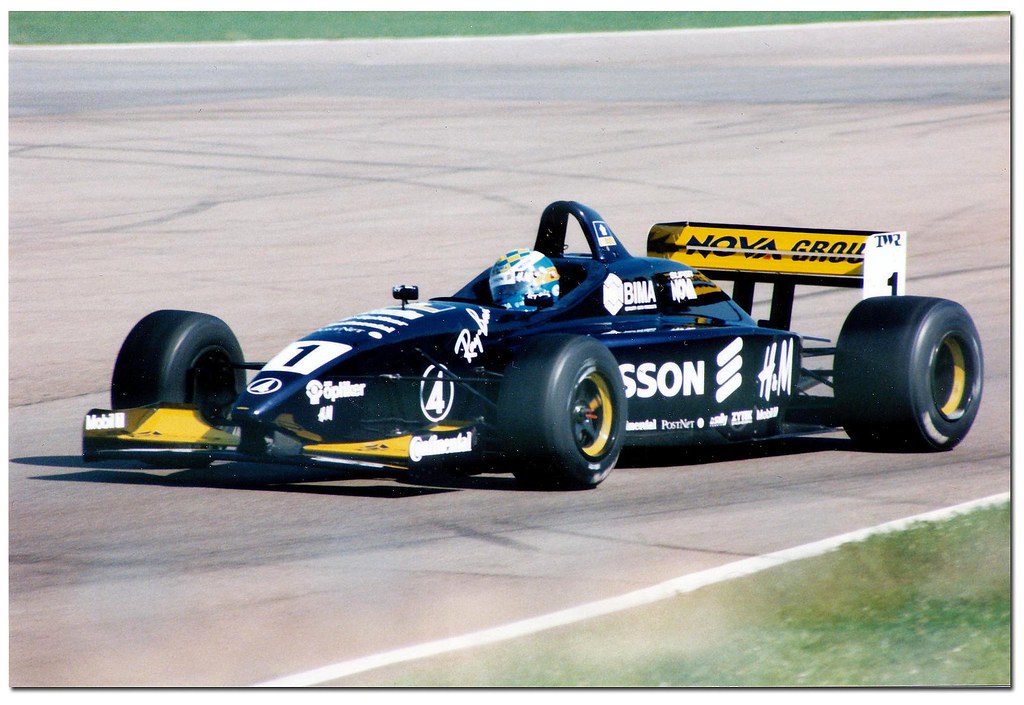

Kenny Brack in action during the 1996 F3000 season at Silverstone. Photo credit goes to unknown from Flickr.com

1997 once again provided a title battle that went on until the business end of the season. Once again it was RSM Marko and Super Nova drivers who were fighting it out for the title, the only difference being the drivers involved as the Brazilian Ricardo Zonta turned the tables on RSM Marko to claim the title by 1.5 points from the Colombian Juan Pablo Montoya for RSM Marko. The series featured a talented crop of drivers as the likes of Jason Watt,Jamie Davies and Max Wilson established themselves as men to watch in their rookie years. 1997 would see the profile of the championship rise as the series gained mainstream television coverage from ITV,further enhancing the profile of the series for the future.
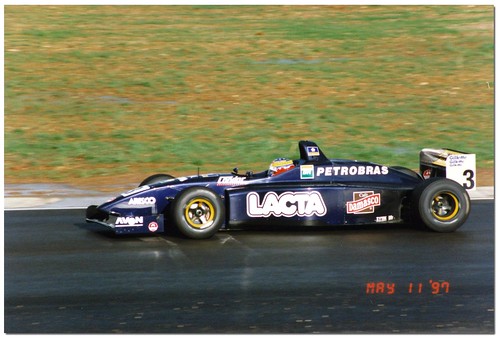

1997 champion Ricardo Zonta in action during the opening race of the year at Silverstone. Photo credit goes to unknown sourced from Flickr.com

For anyone also interested in this period of F3000 racing, EdwinTV9 has kindly posted the 1997 ITV season review on Youtube. The link is below, feel free to view it.

1998 was a stellar season for F3000, the last year of the Lola T96/50 chassis produced a thrilling title battle between Super Nova driver Juan Pablo Montoya and the young German Nick Heidfeld. The profile of the series continued upwards in 1998 as established F3000 teams such as Super Nova, DAMS and Astromega were joined by the likes of West Competition team and the RTL Team Oreca. These were big for the series as the West Competition team was a McLaren junior team to help Nick Heidfeld progress, with the RTL Team Oreca being a BMW junior team also. This showed the growing manufacture influence with the F3000 series.

On the track Juan Pablo Montoya prevailed over Nick Heidfeld after a final round showdown, with the Williams test driver Montoya taking his talents to the highly competitive CART series in America, a title he duly won in 1999 before winning the prestigious Indy 500 in 2000 and returning to the F1 paddock with Williams in 2001. Of the rest Gonzalo Rodriguez impressed in his second year with two wins in the final three races, with Jason Watt once again showing his talents in 1998 for the Den Bla Avis team.

https://encrypted-tbn2.gstatic.com/images?q=tbn:ANd9GcTLlHl1wzG_CPcGJ1mzRvEIzol_8LWCYo8R2D8X2jBHH28GKoyx7A
Juan Pablo Montoya in action during his title winning year in 1998. Photo credit goes to unknown sourced from Flickr.com

Also individual videos reviewing the 1998 F3000 season can be found on Youtube. The coverage come from ITV highlights and the first round link can be found below. Feel free to watch.

1999 was arguably the most successful year for the F3000 series during it’s existence as the new Lola B99/50 chassis produced grids of close to forty cars fighting over twenty six grid spots. The 45 minute qualifying sessions suddenly became like races themselves as everyone fought to get into the main race. By now the series was supporting the F1 races the entire year with every race supporting a European F1 grand prix weekend.

This link to the F1 paddock was now becoming far more obvious in F3000, with the West Competition team fielding Nick Heidfeld again as his dominated the year to comfortably win the title, with Gonzalo Rodriguez finishing third posthumenously in his Benetton backed Team Astromega entry, whilst Stephane Sarrazin impressed in his second year in the category for the Gauloises Formula Prost junior entry. Other teams dipping from F1 into F3000 included Williams with their all Brazilian Petrobras junior team, Sauber with their Red Bull junior/RSM Marko team and the short lived Portman-Arrows team, which only survived three races despite Arrows F1 support.

1999 would prove to be a year of both tragedy and transition for the category, with firstly the tragic death of paddock favourite Gonzalo Rodriguez whilst qualifying for his second CART race for Team Penske at Laguna Seca. Soon after this second place driver Jason Watt was involved in a motorcycle accident during a magazine photo shoot, leaving him paralyzed and therefore ending his single seater racing ambitions. Along with Nick Heidfeld moving up to F1 for 2000, the series was looking for a new crop of talent to come to the fore in the upcoming 2000 season.


Nick Heidfeld celebrating victory in Hungry during his dominant title victory in 1999. photo credit goes to Formula1.com

2000 was largely similar to 1999, the only major difference being a rule implemented before the start of the season to limit the grid to fifteen teams of two entries, meaning several of the smaller team were forced out of the series after poor 1999 seasons. This made the grid a lot more stable throughout the year, which was another classic season of F3000 as third year drivers Bruno Junqueira for the Williams affiliated Petrobras junior team and Benetton backed D2 Playlife Super Nova drivers Nicolas Minassian. Junqueira was the second half of the Williams shootout for a race drive in 2000, infamously losing out to Jenson Button before claiming the F3000 title. The series struggled to produce a crop of incoming talent to F1, as both Junqueira and Minassian taking their talents to Chip Ganassi Racing in the CART series for 2001.

This seemed strange as the series F1 links grew stronger in 2000 with the European Arrows team being set up as a junior squad for the F1 team, with eight F1 test drivers racing in the category in 2000. Behind Junqueira and Minassian rookie’s Mark Webber and Fernando Alonso impressed, with Alonso joining Minardi for the 2001 F1 season, before Webber replaced him for the 2002 season. In retrospect it appears the 2000 season was a watershed moment for the F3000 series, with sadly the series having it’s final days in the sun in 2000 before the series began to implode as rising costs ruined the series.


Bruno Junqueira on his way to winning the 2000 F3000 title in his brightly coloured Petrobras junior racing entry. Photo credit unknown sourced from Paul11f1.wordpress.com

The series lost more back marker teams with the grid reducing from 30 to 26 cars for the 2001 season. The series incorporated a inaugural fly-away round to open the season, supporting the Brazilian Grand Prix. The F1 only grew even stronger this year with Minardi sponsoring the Coloni team to become European Minardi for 2001, although the grid did lose the McLaren junior team after a difficult 2000 season for the team. Coca-Cola also came on board sponsoring the Nordic racing team, showing the prestige the series held at this time.

The Coca-Cola support of Nordic racing was timely as their driver Justin Wilson dominated the series to claim a comfortable title, beating Benetton backed Super Nova driver Mark Webber, team mate Tomas Enge and DAMS driver Sebastien Bourdais. The standard at the top of the grid was as good as ever, although the overall quality of the grid was slipping slightly from the landmark years of the series in the late 1990’s.

Justin Wilson in action during his F3000 title year in 2001. He went on to impress when he could during a short F1 career after this.
Photo credit goes to LAT.com sourced from AtlasF1.autosport.com .

From here the series dwindled in both popularity and relevance to F1 during the next few years, with the only champion between 2002 and the series end in 2004 to get an F1 drive the following year was Tonio Luizzi, and he shared a half season drive with Red Bull Racing in 2005. 2002 champion Sebastien Bourdais took his talents to America, winning the Champ Car series four years in a row between 2004 and 2007, before impressing in flashes with Scuderia Toro Rosso in one and a half years of F1, before being dropped halfway through the 2009 season. 2003 champion Bjorn Wirdheim has never started a F1 grand prix, becoming a third driver for Jaguar racing in 2004, before switching to Champ Car and subsequently establishing himself in the Japanese Super Formula single seater and Super GT series over the last several years.

F3000 was sadly replaced by GP2 for the 2005 season, something which was a shame but ultimately necessary as the F3000 series had simply run out of steam. The series was fantastic whilst it lasted, with it’s glory years surely making the series the most high profile junior category ever. We will likely never see again a grid full of forty cars competing to even qualify for an F1 supporting event, which simply shows the strength the F3000 series once had. It is a sorely missed final step on the ladder to F1.

Any thoughts on this article feel free to post a comment good or bad on the F3000 series.
Japanese racing scene gaining popularity

In the 1990s Japan was a viable career alternative for young drivers who found their options limited in Europe. The resident Japanese F3000/ Formula Nippon and Super GT series attracted well known names such as Eddie Irvine, Tom Kristensen, Jacques Villeneuve and Heinz Harald-Frentzen.

During the late 1990s and 2000s the Japanese racing scene suffered a lull in worldwide attention, although in recent years both Japan and America are seeing a resurgance in interest as young drivers from Europe increasingly look further afield to attain a professional racing career. The racing scene seems increasingly focused on money in the last few years, with several Formula One teams struggling for finance, leading to a situation where increasingly a driver’s ability to bring a budget with him determines who is promoted from the junior formula’s.

In response to this Japan is seeing an upturn in popularity as the best young Japanese drivers are now being joined by accomplished and high profile drivers from Europe in their Super GT and Super Formula single seater series. In recent years the quality of the Japanese racing scene has been proven in Europe as long time Super GT and Super Formula drivers Andre Lotterer and Loic Duval led the Audi attack on the World Endurance Championship and the Le Mans 24 Hours.


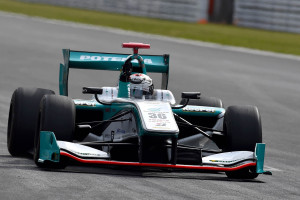
Andre Lotterer racing in the Super Formula single seater series last year. Photo sourced from http://www.racingblog.de

Other notable drivers to have turned their careers East to Japan include James Rossiter, Vitantonio Luizzi, Narain Karthikeyan and Andrea Caldarelli. The number of European drivers joining the Japanese scene only looks set to swell in 2015, with rumors that young drivers such as Macau GP winner Felix Rosenqvist, 2009 Formula Renault 3.5 series champion Bertrand Baguette, GP3 race winner Jann Mardenborough and 2013 GP2 champion Fabio Leimer all rumored to be looking for drives in Japan this year. Heikki Kovalainen is the latest driver to defect to Japan as he announced a deal this week to join Team SARD Lexus for the Super GT series this year.

Complementing the increasing European talent is the very best of Japanese driving talent, with the likes of Kamui Kobayashi, Kazuki Nakajima and Takuma Sato returning to race in the Super Formula and Super GT series. Alongside them are the likes of GP2 racer Takuya Izawa and former Indycar racer Hideki Mutoh show that the talent on the Super Formula grid is up there with any grid outside of F1 at the moment.


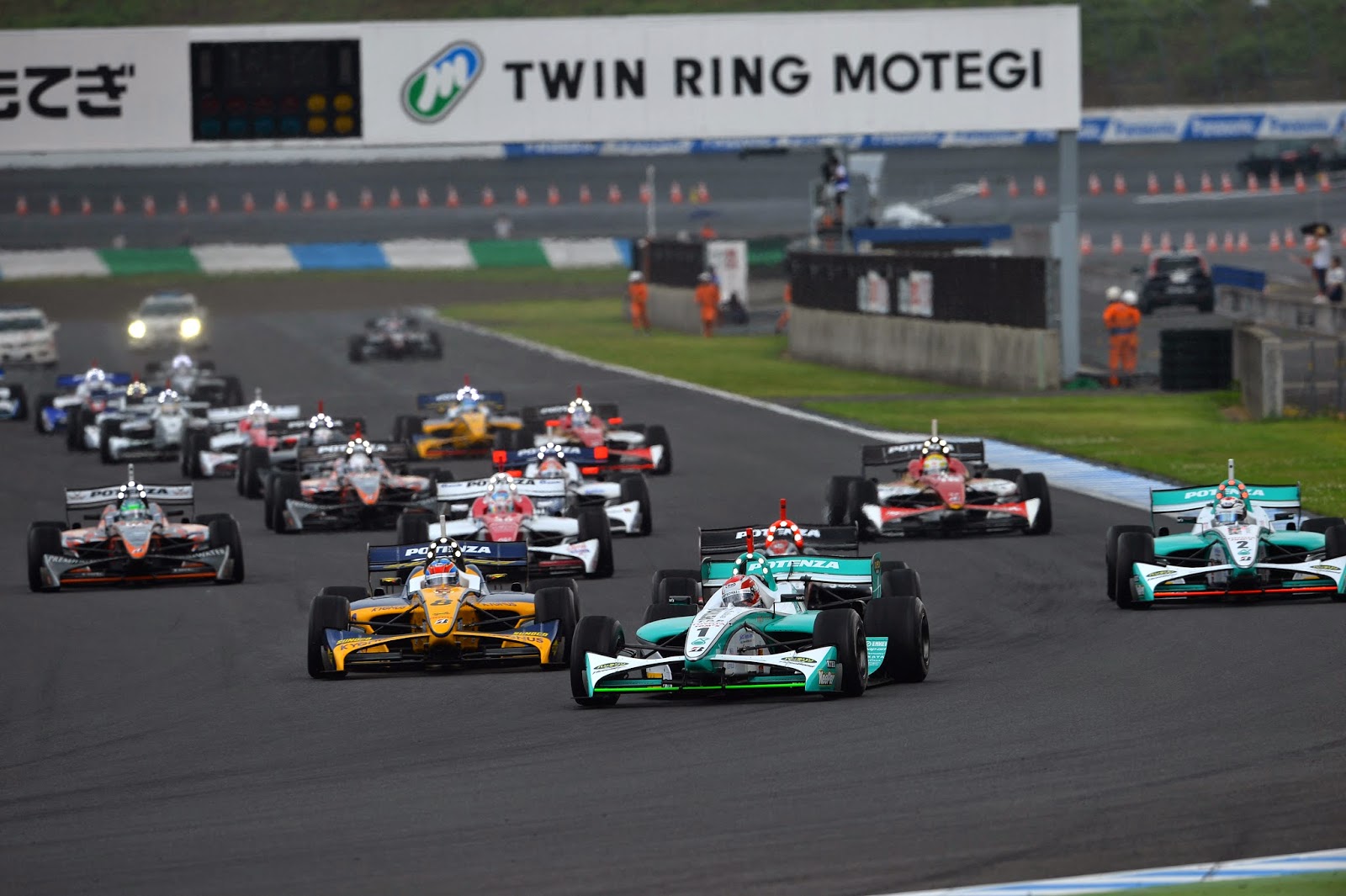
The Super Formula grid races away from the line at Twin Ring Motegi in 2013. Photo sourced from http://www.supergtbrasil.blogspot.co.uk

Japan is so attractive right now for young drivers as it promises the opportunity to become a professional racing driver rather than struggle to attract finance to continue on the young driver ladder in Europe. Alongside the chance to earn a professional driver there are also copious chances to link up with a manufacture, with Toyota running a LMP1 programme in the WEC, with Nissan joining them in LMP1 this year also. Honda is also returning to F1 and has links with Indycar also, with all of these manufactures assisting or running teams in the Super GT series. Japan is therefore the perfect shop window for young drivers to put themselves in should they wish to put aside their dreams of F1 and become a factory driver for a distinguished manufacture. The future seems increasingly bright for the Japanese racing scene, as it becomes increasingly prominent in international motor sport, returning it to it’s glory days of the past.

What are your thoughts on this article? Please feel free to leave any comments below good or bad.

McLaren have best driver problem in F1

Whilst teams like AMG Mercedes try to work out how best to keep their drivers in line next year, and others like Red Bull and Ferrari adapt to new driver line up’s, McLaren currently have the best driver problem on the grid for the next few years. Whilst today’s announcement of Fernando Alonso and Jenson Button will lead to questions as to how the two, and especially how Fernando Alonso and Ron Dennis can work together effectively after a tumultuous 2007 season. The team now has an extensive amount of experience which will greatly help the Honda engineers in their debut season, with two very quick young drivers waiting in the wings for the future.

Alonso returning to McLaren for next year would have been laughed at before the 2014 season, however this shows how crazy a season it was as Alonso managed to escape a Ferrari team in transition, with a return to McLaren providing promise of potential wins and further championships for the 33 year old Spaniard. His return to a McLaren team once again spearheaded by disciplinarian Ron Dennis will be an interesting sub-plot to the 2015 season, however both have matured and changed since 2007 therefore a return to the days of a broken relationship between the two is unlikely to occur.

As for Jenson Button, he was forced to sit on the sidelines and wait for an extraordinary amount of time as McLaren deliberated over whether to retain his experience for a crucial first year for the new Honda engine next year, or whether to start planning for the future by placing promising rookie Kevin Magnussen alongside Alonso. This morning McLaren finally announced their decision to retain Jenson Button, although it appears he’s been forced to take a pay cut for next year and it’s rumored the team have signed him to a one year deal.

http://www.motorsport.com/all/photo/main-gallery/yasuhisa-arai-head-of-honda-motorsport-jenson-button-kevin-magnussen-fernando-alonso-a/?a=459589
All smiling faces at today’s announcement as Alonso and Button are confirmed at McLaren-Honda next year.

Whilst both Fernando Alonso and Jenson Button will be thrilled everything is finally confirmed, meaning they can now fully focus on the 2015 season and the beginning of a new works partnership with Honda, McLaren will also be rubbing their hands with glee over both their current plans extending into the future. For the next few seasons, the team arguably has the best driver line up in F1 with three world championships and 27 years of F1 experience between them going into the 2015 season. This experience and competitive determination will greatly benefit the development of the new Honda turbo next year.

Going into the future with a driver line up comprising 33 year old Fernando Alonso and 34 year old Jenson Button, McLaren have clearly been forced to plan for the future when these two incredible drivers decide to retire from Formula One. This is the brilliant problem McLaren have as they already have two very quick young drivers on their books who could adequately carry on the McLaren-Honda project in the future.

http://www.motorsport.com/f1/photo/main-gallery/kevin-magnussen-mclaren-f1-192/?sz=9&s=-6&oft=821&id=1792681&i=806
Kevin Magnussen in action for McLaren during the season ending Abu Dhabi Grand Prix last month.

Kevin Magnussen had an impressive debut season in F1 this year, and whilst we rightly feel hard done by that he’s not on the grid next year, will be aware of the wider implications and the opportunity he has at McLaren if he stays in his current position for a year or two more. Alongside Magnussen McLaren also supports the highly promising young Belgian driver Stoffel Vandoorne. Whilst that name won’t mean anything to the majority of casual F1 fans, Vandoorne has impressed in every category he’s raced in, including a hugely impressive 2nd in the standings during his debut year of GP2 racing this year. A second season in GP2 looks the most likely option for him with his objective surely to dominate and win the title. From here a reserve driver role with McLaren is likely until either Alonso or Button is replaced by Vandoorne to partner Magnussen.

http://www.motorsport.com/f1/photo/main-gallery/stoffel-vandoorne-third-driver-mclaren-f1-team-33/?sz=9&s=-6&oft=424&id=1793457&i=416
Stoffel Vandoorne in action for McLaren-Honda during the post season test in Abu Dhabi last month.

For all concerned it seems today’s driver announcement is the start of a new, successful era as firstly McLaren and Honda both benefit in the short and long term. The experience Alonso and Button will bring will be invaluable, whilst the team has two quick young drivers to replace them when the timings right. For Alonso and Button it gives them fresh hope about a revival at McLaren after two unsuccessful year with the promise of wins and championships enough to keep both motivated.

Finally for Magnussen and Vandoorne it gives them hope regarding the potential of the team they are both likely to drive for in the next few years. Both will miss the development phase of the project and will likely both come in when the team is ultra competitive. Put simply, with today’s press announcement, McLaren may have just revealed it’s plans for F1 success for the next 10-15 years. The 2015 season will now be even more eagerly anticipated.

Photo credit goes to :

Announcement photo – Photo credit goes to http://www.Mclaren.com with extra credit going to http://www.Motorsport.com also.

Kevin Magnussen photo – Photo credit goes to XPB images, with special credit going to http://www.Motorsport.com.

Stoffel Vandoorne photo – Photo credit goes to XPB images, with extra credit going to http://www.Motorsport.com also.

Indycar rumour mill round-up

This week has already seen some interesting rumours develop relating to potential driver moves concerning the Indycar series. The American open wheel championship has become increasingly popular with drivers over the past few years, with plenty of European drivers now turning their back on the exorbitant costs needed to simply get close to Formula One, yet many of these racers spurn the well supported World Endurance Championship as they want to remain racing single seaters. This leaves the Indycar series as the only alternative prominent single seater championship outside of F1 or the junior categories such as GP2 or Formula Renault 3.5 series.

After Carlin announced earlier this week that they would be joining the rejuvenated Indy Lights series next year, with a view to moving up to the Indycar series in the future, this shows the increasingly appeal of Indycar to the European racing community. Firstly whilst it’s not a particularly new rumour it does seem Daniel Abt is looking to move away from GP2 for next year and join the Indycar grid for next year.

He tested for the Andretti Autosport team in late October at Barber Motorsports Park and Abt was quoted as saying about the test “I had a fantastic day with plenty of fun and learned a lot. I didn’t do this test out of boredom, but would like to explore options for next year. The test was a cool experience that definitely whets my appetite for more.” Whilst Abt has current commitments with the new Formula E series, it does appear Abt is keen to change his direction and leave GP2 for the Indycar series next year.

Another former GP2 rival could be joining him stateside, as the American Conor Daly has switched his attentions back to his homeland after running into budget problems during his second year of GP2 this year. Whilst this once again isn’t a revelation it does show how the series is attracting top line American talent not just European drivers for the series, and Daly would need less acclimatization as he finished the 2013 Indy 500 in 22nd position in a one-off deal for the iconic race.

Another top line American driver that is looking to join the Indycar grid in 2015 is Alex Rossi, formerly the Caterham and Marussia reserve driver seems to have given up on F1 after coming very close this year to making his race debut with the Marussia team. Rossi was set to make his debut at this years Belgian Grand Prix in place of Max Chilton, however Chilton was re-installed at the last minute. Rossi has now switched his attention to the Indycar series for next year. Rossi has spent the last few months talking with prospective teams, and hopes to announce a deal with a competitive team in the next few weeks and into the new year.

British racer and GP3 runner up Dean Stoneman is another driver looking to switch from Europe to the American open wheel racing scene, and hopes to secure himself a Indycar test this winter in preparation for a move stateside. Whilst Stoneman himself feels ready to join the Indycar series, he has also stated if needed to he will join the feeder Indy Lights series first to gain experience of the american road circuits and the ovals. Whilst nothing is concrete at the moment, it seems plenty of Indycar and Indy Lights teams will be interested in him joining them next year. Could a potential link up with British team Carlin work out for Stoneman next year?

The final and most exciting potential rumour surrounding the Indycar series recently has been the news former Scuderia Toro Rosso driver Jean Eric Vergne is very interested in joining the series, as his next move after being replaced in F1 for next year. The Frenchman has stated he very much is looking at the Indycar series and it seems likely he will have a string of offers to join the series next year. Whilst Vergne may take a season or two to learn the American ovals and road courses, once he gets comfortable Vergne would be a formidable competitor for anyone in the series. Nothing is planned at the moment in terms of tests or significant talks with teams, although it seems likely Vergne’s next stage of his career would be stateside.

What now for Jean Eric Vergne?

First of all, Jean Eric Vergne deserves to be on the grid at the next years Australian Grand Prix. Vergne has shown more than enough potential and results over the past three seasons to warrant a place on the grid in 2015. Vergne has simply become a casualty of the ruthless Red Bull young driver scheme.

Whilst Red Bull have backed him from a young age and gave him a shot in F1 for three seasons, if you don’t show the necessary progress you will quickly be replaced with the next young hot shoe product from the Red Bull line up. With the news last Friday that Red Bull junior F1 team Scuderia Toro Rosso would replace Vergne with their latest prospect Carlos Sainz Jr. For now it seems Vergne has few options to remain in F1 next year, so what options does he have to remain racing next year?

The most likely option it seems for Vergne to remain within Formula One next year appears to be with the Williams team. Rumors began during the Abu Dhabi Grand Prix weekend as Vergne was spotted spending a fair amount of time in the Williams hospitality area. Whilst both Valtteri Bottas and Felipe Massa are confirmed to 2015 their reserve driver role is vacant as Felipe Nasr joins Sauber for next year. If this move comes to fruition it’s likely Vergne will get some Free Practice runs next year, and would be well placed to impress as Williams will be looking to replace Felipe Massa in several years time.

It seems the Williams role seems the most likely option to stay in F1 next year, with the only other likely reserve driver role would be with the Red Bull team, although this is unlikely to interest Vergne as there will be very little chance of being promoted to a race drive.

Vergne can be heartened by the thought that he will likely find plenty of offers from other disciplines of motorsport, and can take heart from the example of fellow Red Bull refugee Sebastien Buemi. Vergne was one of the drivers who replaced Buemi at Toro Rosso for the 2012 season, and Buemi became the Red Bull reserve driver before rebuilding his career with Toyota in the World Endurance Championship, where he has shown his tremendous speed to claim the drivers title in the WEC alongside Anthony Davidson.

The World Endurance Championship is growing in significance every year with Nissan joining Audi, Porsche and Toyota in competing for wins next year. Vergne would be able to retain a reserve driver role in F1 with a WEC campaign with a manufacture or privateer team.

Another option for Vergne could be the new Formula E championship. The series has a prestigious line up of drivers and teams and is growing with every race in it’s debut season and would be an attractive option for next year. Formula E would be another series which could inter link with his reserve driver commitments should he find a drive within F1.

Other much less likely options would be for Vergne to swap F1 for Indycar, with his single seater skills would be clearly evident as he would likely become a household name in the series. Vergne once adjusted to the Dallara DW12 Indycar could become a multiple series champion such is his skill. Another option could be a top line career in GT racing with prominent series such as the Blancpain Endurance Series or GT classes within the WEC would be a great chance to rebuild his career after F1.

From here it’s not known where Jean Eric Vergne will be racing in 2015, with several options for him it’s up to him and his agent to decide which is his best option for next year. For me the best option would be a reserve driver role in F1 to keep his face known within the F1 community, with a sportscar campaign the perfect chance to show his considerable talent such as Sebastien Buemi has done this year. It would be a shame if Vergne isn’t racing at all next year, as he’s shown in his 3 years at Toro Rosso he deserves to remain at the top line of motorsport, where his talents belong.

Red Bull have dilemma with Toro Rosso seat

Since the shock announcement of Sebastien Vettel last month that he was leaving Red Bull at the end of the season, and the immediate response of Red Bull to announce Daniil Kvyat as his replacement, many have been speculating as to who will take the second Scuderia Toro Rosso seat for next season.

With the headline making rookie Max Verstappen joining for next season, it now seems Red Bull have a straight choice of four drivers to partner him at the Red Bull junior team next season. The ultimate aim of the team has always been to promote young Red Bull talent to the main team and therefore suggests Carlos Sainz Jr will be the favourite to take the seat.

The young Spaniard and son of rallying legend Carlos Sainz has impressed this season to take the prestigious Formula Renault 3.5 series and was a shoe in for a Toro Rosso seat before Verstappen stole his thunder this Summer. Now with Kvyat moving up he has a second chance at a Toro Rosso and it would be difficult to see him moving anywhere higher other than F1. He has impressed in testing with Red Bull and Toro Rosso, and his talent deserves an F1 seat with this being his perfect chance.

Sainz Jr in action earlier this year in the Renualt World Series

The next most likely driver to keep his drive would be the Frenchman Jean Eric Vergne. It looked as if he would be turfed out of F1 after the Verstappen announcement, although he is another to be given a second chance with the Kvyat announcement. Vergne is a quick driver who more than matched ex-team mate Daniel Ricciardo during the races during their two seasons together at Scuderia Toro Rosso.

Vergne is more than deserving of a place in F1, and his main plus for him right now is the experience he can provide to both the team and Verstappen next year in comparison with another rookie like Sainz Jr.

The other two contenders are still being considered, although it does seem from here that both Pierre Gasly and Alex Lynn still have some rungs of the single seater ladder to climb before they reach F1.

Firstly Gasly was hugely impressive in his rookie year in the Renault World series, as the reigning Formula Renault Eurocup champion ended the year well to claim a distant 2nd in the standings behind fellow countrymen Sainz Jr. From here it appears the most likely move for Gasly is to move to GP2 for next year, something he completed a part season in this year for the Caterham team. A deal with the reigning champion DAMS team seems right now the most likely option for Gasly next year, with his talent meaning he will be an immediate title contender next year.

Pierre Gasly racing for Caterham in GP2 this season. Credit goes to GP2 media service for the photo.

The final and most unlikely contender to get a promotion to F1 is the impressive young Brit Alex Lynn. The GP3 champion elect has an impressive junior racing CV including a Macau GP F3 win and numerous titles in British junior racing. He has done everything asked of him this season for Red Bull, although it seems his most likely option right now is to step up to either the Renault World Series or GP2, also at this time it is unclear which series or team he will race with next season.

A time frame for when the announcement will be made has yet to be announced, although for both Red Bull and the driver they choose, the sooner the better as this gives them plenty of preparation time for the coming 2015 F1 season.

At this moment it seems a straight decision between Sainz or Vergne, although Gasly and Lynn could be outside contenders for a role with the team next season. Whichever driver they choose, Red Bull will have picked a very fast young driver, with plenty more queuing up behind him for the moment they falter.

Alonso saga finally coming to a close

Ever since Fernando Alonso publicly made disparaging comments about his Ferrari car after the 2013 Hungarian Grand Prix, speculation has abounded as to his future with the fabled Ferrari team. Whilst Alonso had previously commented on his wish to remain at Ferrari for the rest of his career, and had signed a long term deal tying him to the team until the end of 2016, it appeared increasingly likely he could leave the team as their cars failed to provide with championship opportunities.

At age 33 and coming closer to the end of his career, Alonso was increasingly motivated to add more world titles to his two already from his years at Renault in 2005-2006. Alonso should have won the 2010 world title in his first season with Ferrari, although a strategic error in the final race in Abu Dhabi meant he was stuck behind the Renault of Vitaly Petrov, and was forced to watch Sebastien Vettel steal his first world title from him.

From here 2011 was a lean year as Ferrari struggled and Red Bull dominated, although 2012 saw Alonso wring every last ounce of performance from his once again poor Ferrari car, to take the championship title fight into the final race in Brazil. Despite leading the title fight for a majority of the year, Alonso once again was beaten by Vettel at the final race for the title.

Alonso fighting for the world title at the 2012 Brazilian GP

In 2013 Ferrari once again struggled with a poor car as Red Bull and Sebastien Vettel once again dominated, something Alonso grew increasingly frustrated with. After his response from a reporter asking what he would like for his upcoming birthday in the aftermath of the Hungarian Grand Prix, Alonso sarcastically responded with “someone else’s car.” These were ill timed comments from Alonso as there were persistent rumours at this time that Alonso and his manager were talking to Red Bull about potentially him joining the team to replace his great friend Mark Webber for 2014.

From here Ferrari president Luca Di Montezemolo warned Alonso about his F1 conduct with regards to his comments, with a statement from this time stating “There is a need to close ranks, without giving in to rash outbursts that, while understandable in the immediate aftermath of a bad result, are no use to anyone. That was a reference to the latest comments from Fernando Alonso, which did not go down well with Montezemolo, nor with anyone in the team.All the great champions who have driven for Ferrari have always been asked to put the interests of the team above their own.”

Fernando Alonso in action during the fateful 2013 Hungarian GP

After the prospect of an unlikely Red Bull move was quashed after Daniel Ricciardo was announced as their new driver, it seemed Alonso was stuck with Ferrari until the foreseeable future. This was not entirely a bad thing however, as many tipped Ferrari to benefit most from new 2014 regulation which saw a switch to turbo V6 power. The fact Ferrari would be the only team other than AMG Mercedes producing both their own cars and engines, which suggested they would have an advantage with the design of their 2014 car and engine.

After a mixed testing period, once the season started it quickly became apparent AMG Mercedes would be dominant as the Mercedes engine was clearly the most powerful, with some even suggesting an 60-80bhp advantage over the Ferrari powerplant. It was also apparent the AMG Mercedes and Red Bull chassis were much better than the Ferrari F14T. Alonso once again performed heroics to drag the car onto the podium with a 3rd at the Chinese Grand Prix, it was clear however Alonso would once again miss out on the world title in 2014 as the two AMG Mercedes drivers Lewis Hamilton and Nico Rosberg dominated the season.

Heads began to roll at Ferrari as team principal Stefano Domenicalli resigned after the Bahrain Grand Prix, to be replaced by the CEO of Ferrari North America, Marco Mattiacci. Despite having very little racing experience Di Montezemolo felt his success with Ferrari North America could help provide a fresh impetus to Ferrari. It was clear now that the relationship between Alonso and Di Montezemolo was strained. As the season wore on and Alonso struggled it also became clear Mattiacci felt Alonso could be deemed expendable as his frustrations and lack of commitment to Ferrari increased.

This therefore provided a very unlikely initial rumour which quickly grew much larger. Honda were to join F1 in 2015 with McLaren, and it soon became clear Honda would provide an open chequebook to sign a top line driver. Whilst Sebastien Vettel laughed off the rumours, it soon became clear Alonso was seriously considering the offer. The news that long term Ferrari president Luca Di Montezemolo was to leave the team at the Italian GP did little to persuade Alonso to stay.

Alonso and Di Montezemolo embracing at the 2014 Italian GP

This ongoing saga reached critical mass at the 2014 Japanese GP, where it became apparent in the build up to the weekend that Alonso and Ferrari had reached an agreement to terminate his contract after the 2014 season. In the next few days the bombshell was announced that Sebastien Vettel was to leave Red Bull, with their team principal Christian Horner letting the cat out the bag by announcing he was to join Ferrari. This development left Alonso in a weakened position as it now became obvious his only options for 2015 were to either join McLaren or take a sabbatical.

After brief talk of Alonso potentially taking a year off and desperately trying to get himself into an AMG Mercedes seat for 2016 was shot down by the team, it became clear Alonso would likely sign for McLaren. Whilst the team has struggled in the past two years, and also Alonso’s turbulent season with the team in 2007, it appears fresh impetus from Honda will give Alonso a greater chance to be competitive and add the world titles his craves to his resume. McLaren with Honda will likely by Grand Prix winners within two years, whilst Ferrari are talking of several years of re-building before becoming dominant again.

This is why Alonso was so keen to leave the team, as sticking around for several years of re-building will not leave him enough time to win any more world titles. This optimism is something McLaren can provide with their’s and Honda’s winning pedigree. An official announcement on Alonso’s move to McLaren is likely to come later this month, with the next big decision for the team being whether to retain either experienced Brit and key ally of Honda Jenson Button or the team’s young rookie Kevin Magnussen. Plenty of people in the paddock with be relieved when all the confirmations are revealed, as Alonso looks forward to developing the McLaren-Honda package in 2015.

Photo credits go to :

Alonso 2013 Hungarian GP – http://www.f1fanatic.co.uk/2013/07/28/alonso-faces-investigation-over-drs-breach/

Alonso 2012 Brazilian GP – http://www.motorauthority.com/news/1080651_vettel-picks-up-third-f1-world-champion-after-brazilian-gp

Alonso Di Montezemolo photo – http://www.f1fanatic.co.uk/2014/09/06/hamilton-ends-pole-position-wait-monza/gp-italia-f12014-23/

F1 financial crisis long time coming

Last week’s build up to the United States Grand Prix was dominated by the devastating news within the space of a few days that the lowly Caterham and Marussia teams had both entered administration, and were going to miss at least the next two races if not more. The reaction amongst the F1 paddock is exactly why these two teams went into administration in the first place.

Whilst the top teams and personnel such as Bernie Ecclestone believed it was unfortunate that both went into administration, they also felt there was little they could do to change the spending culture of F1. On the other hand, midfield teams such as Sahara-Force India and Sauber have used both teams as an example of why the revenue streams within F1 need to be changed to make it more sustainable for the lower teams. The only exception at the top calling for change in F1 is FIA president Jean Todt, someone who made known his frequent frustration with failed attempts at a cost cap, something which he feels F1 needs to reduce it’s budgets by roughly 30-40% to make F1 sustainable.

After brief talk of a potential protest from some teams to further highlight the need for fairer revenue streams for the teams, Sahara-Force India deputy team principal Bob Fernley had strong words for the media in the run up to yesterday’s Grand Prix. He was quoted as saying by BBC Sport that ” F1 is at a crossroads. There is clearly an agenda, Two teams have been forced out. How many need to be forced out before they achieve the goal they are looking for? We have missed an opportunity in F1 to be able to get it sustainable, That is passed us and there is no point looking back.”

The strong words show the frustration of the midfield teams as they have been working tirelessly for a long time hoping to achieve some agreement from all the teams for a significant cost reduction in F1. In the last few days however some high ranking F1 personnel have slightly changed their tune and appear now willing to help ensure a cost reduction in F1. F1 supremo Bernie Ecclestone has recently favoured a move to third cars from the top team being loaned out to midfield teams for them to run, yet now appears to show some remorse for the way F1 has gone recently. He is quoted as saying “There is too much money being distributed badly – probably my fault. Like lots of agreements people make, they seemed a good idea at the time. I know what’s wrong, but don’t know how to fix it. ”

This statement from Ecclestone does seem a slight understatement, as it’s believe last year Ferrari earnt $200 million, $90 million of which was fully guaranteed before they even turned a wheel, yet Marussia received only $14 million for completing the whole season as Caterham earned nearly $28 million dollars. For there to remain a steady stream of teams in F1 this clearly needs to be rectified, especially as F1 keeps pushing this green initive starting with vastly more expensive engines for this year.

The uneven revenue structure for the teams currently in F1 only enhances the vicious circle of F1 whereby the best teams get the highest money from FOM, therefore they usually produce a faster car because of their larger budget, which then ensures they further enhance their prize money awarded by FOM. This is only making the performance gap from the top to the midfield teams even bigger, with the likes of Sahara-Force India and Sauber struggling to keep racing competitively this year.

This vicious circle goes back to the late 1990’s and early 2000’s, when manufacters such as Mercedes, Ferrari,BMW, Peugeot, Honda, Renault and Toyota all invested heavily in Formula One. This constant drive for success led to a spending war to which F1 is only just reeling from. Despite most of these manufacters leaving the sport by 2010 the biggest teams such as Ferrari, McLaren,Red Bull and AMG Mercedes have regularly spend over £185 million pounds a year to retain their competitive advantage. With teams like Sauber operating on a budget of £90 million, it’s easy to see why they struggle so much to match the top teams.

This financial model has been in place for several years now, however it’s only this year that it’s rearing it’s ugly head on a large scale. Whilst the demise of the Hispania team after the 2012 season was soon as no more than a backmarker team running out of money, the sudden demise of both Marussia and Caterham has finally showed F1 has a huge financial problem on it’s hands in the next few years. The introduction of highly expensive new turbo engines for this year has ramped out costs, which alongside a constant struggle to find sponsorship in F1 after the financial crisis in 2008, has led to the current situation where half the grid are struggling to pay the bills as the other half refuse to take any significant steps to stop this.

If F1 continues to use it’s current revenue model, we could very soon be seeing a grid of 14-18 cars of which Ferrari,AMG Mercedes, McLaren and Red Bull all supply the rest of the grid with third of even fourth cars. All the while the likes of Sauber, Sahara-Force India and Williams will be consigned to the history books as teams who simply ran out of money. As a passionate fan of F1 this would be a huge shame for the sport if we were simply to have three or four manufacters supplying the whole grid, which somehow doesn’t carry the same appeal of a grid containing 9-10 teams such as Sauber. Still, it would make a lot of money for the teams in extra sponsorship and give them a better portion of the teams prize money so their main priority would be boosted. That’s a crying shame for what is described as a sport, if it’s eventually money which strangles the sport, leaving hundreds of millions of fans and thousands of employees feeling lost.

Steve Jones wins battle for 500cc F3 victory at Combe

The penultimate race of the day was an eagerly anticipated one, as it was the first 500cc F3 race to take place at Castle Combe since 1955. In period the category was a regular at Castle Combe as young racers such as Stirling Moss fought to prove themselves, although sadly the category hadn’t returned since it’s heyday in the 1950’s. Luckily the 500 Owners Association put together a well supported grid for this Autumn Classic race, with Steve Jones on pole in his Cooper, with George Shackleton alongside in his similar Cooper.

After a rolling start the 15 minute race got underway with Shackleton assuming the early lead from Jones. After the opening lap the leading pair had an advantage of 1-2 seconds over the rest of the field, suggesting this race would simply be between the leading duo. A mistake from leader Shackleton as he ran wide on the exit of the Esses meant Jones sped through into a lead of 3-4 seconds over the recovering Shackleton on lap 3. Over the next few laps Shackleton did manage to close the gap down to 1.7 seconds by lap 7.

A lap later and Shackleton executed a audacious round the outside move on leader Jones at Camp in what was by far the best move of the entire day’s racing. Sadly it didn’t count for much as Jones used a much better exit from Camp to re-take the lead at Folly on the next lap. From here the first two remained close over the final minutes however there were no further changes in position as Steve Jones claimed a close victory over George Shackleton, with the final podium man Gordon Russell far behind the first two in his unique Mackson racer.

Richard De La Roche was 4th in his Smith racer whilst Darrell Woods and John Turner rounded out the top 6 in their Coopers. This race showed why 500cc F3 was so popular in the 1950’s with again close racing provided almost 60 years later. This definitely showed why the 500cc Owners Association needs to organise a return to Castle Combe next year, something that would hopefully be eagerly accepted by everyone involved. For more information on this great series please visit their website below.

Home

Indy Lights on upward trend

After years of struggling with a old car and a decreasing grid, the Indy Lights finally looks to have turned a corner next year with the announcement of a new Dallara race car which has sparked a resurgence in interest in the series. The feeder series to Indycar now appears to have restored itself as a haven for young North American open wheel racers, whilst simultaneously being a viable alternative for frustrated talented young European drivers.

It’s only the middle of October yet already the series has confirmed 10 teams have already agreed to run in the series next year, with likely two cars from each team producing a likely grid of 15-20 cars. This is easily an improvement over the past few years where then entries have been around 10-14 cars. Those already confirming their orders are powerhouse team Schmidt Peterson who have ordered two cars for their Indycar feeder team. Other existing teams to place orders are 2014 front runners Juncos and Belardi racing who have both ordered two cars also. New team McCormack racing have also confirmed their commitment to their series, whilst sportscar team 8star motorsport has confirmed one entry, with the potential for a second also.

Indycar racer Tristan Vautier developing the new Dallara IL15 racer in August.

Existing teams Andretti Autosport and Team Moore are some of the team likely to have placed orders but yet to go public with their intentions to run in the series next year. On the driving front, it appears the quality of the grid will be greatly improved next year. Championship runner up this year Jack Harvey is working on a deal to return to the series next year. He will be keen for the title but will face stiff competition from the likes of 2014 Pro Mazda champion Spencer Pigot, who is likely to move up to IndyLights . Others likely to be returning are 2014 front runners Zach Veach, Matthew Brabham and Luiz Razia. 8Star are also keen to run promising sportscar racer Sean Rayhall if they can find the budget, with young racers Alan Sciuto and Parker Kligerman potentially earning themselves a seat next year after impressive post-season tests so far.

Finally leading the European racing influx so far for next year is Puerto Rican racer Felix Serralles, the only confirmed driver for next year so far. He will join the 2014 champions Belardi racing for next year after some difficult years in the European F3 Championship. Serralles previously proved his considerable talent in the British racing scene, and expect several more racers abandon the cut and thrust money dependent European racing scene for a fresh start at stardom in Indycar.

The final rung on the Mazda Road to Indy scheme is already creating plenty of buzz around the series with an influx of new teams and a new Dallara racer for next year. From here the future looks bright for the Indy Lights series with the support from Mazda providing young drivers the support to move up from the bottom rungs to Indycar, such as with 2014 champion Gabby Chaves and for Spencer Pigot next year. The series will hopefully entice plenty of European racers across to the series with the promise of a part season in Indycar including the a chance at the Indy 500 for the champion surely enough to tempt those disillusioned with the funding required to step up the European single seater echelons below F1. I for one will be eagerly keeping track with the revamped Indy Lights series next year.

For more information on the series please visit the link below
http://www.indylights.com/about/2015-indy-lights