Author: brfcjordan95

Radio assignment production schedule 24/02/15

Today was the first day of our new radio work assignment, hence this first production schedule update. Our main body of work today has been to analyse two existing news and informative radio programmes. I decided to analyze two morning radio programmes from BBC Radio 4 and BBC Radio 5 Live. Whilst both are BBC radio programmes there are enough differences in terms of target audience and style of programme to make comparing them worthwhile.

From here we will begin to formalize ideas for our own radio show in the next few weeks, using some of the ideas we have found amongst the two radio programmes I analyzed. The next step will be to begin banding around ideas for a presentation outlining our own radio segment in the next few weeks and into next month.

Japanese racing scene gaining popularity

In the 1990s Japan was a viable career alternative for young drivers who found their options limited in Europe. The resident Japanese F3000/ Formula Nippon and Super GT series attracted well known names such as Eddie Irvine, Tom Kristensen, Jacques Villeneuve and Heinz Harald-Frentzen.

During the late 1990s and 2000s the Japanese racing scene suffered a lull in worldwide attention, although in recent years both Japan and America are seeing a resurgance in interest as young drivers from Europe increasingly look further afield to attain a professional racing career. The racing scene seems increasingly focused on money in the last few years, with several Formula One teams struggling for finance, leading to a situation where increasingly a driver’s ability to bring a budget with him determines who is promoted from the junior formula’s.

In response to this Japan is seeing an upturn in popularity as the best young Japanese drivers are now being joined by accomplished and high profile drivers from Europe in their Super GT and Super Formula single seater series. In recent years the quality of the Japanese racing scene has been proven in Europe as long time Super GT and Super Formula drivers Andre Lotterer and Loic Duval led the Audi attack on the World Endurance Championship and the Le Mans 24 Hours.


Andre Lotterer racing in the Super Formula single seater series last year. Photo sourced from http://www.racingblog.de

Other notable drivers to have turned their careers East to Japan include James Rossiter, Vitantonio Luizzi, Narain Karthikeyan and Andrea Caldarelli. The number of European drivers joining the Japanese scene only looks set to swell in 2015, with rumors that young drivers such as Macau GP winner Felix Rosenqvist, 2009 Formula Renault 3.5 series champion Bertrand Baguette, GP3 race winner Jann Mardenborough and 2013 GP2 champion Fabio Leimer all rumored to be looking for drives in Japan this year. Heikki Kovalainen is the latest driver to defect to Japan as he announced a deal this week to join Team SARD Lexus for the Super GT series this year.

Complementing the increasing European talent is the very best of Japanese driving talent, with the likes of Kamui Kobayashi, Kazuki Nakajima and Takuma Sato returning to race in the Super Formula and Super GT series. Alongside them are the likes of GP2 racer Takuya Izawa and former Indycar racer Hideki Mutoh show that the talent on the Super Formula grid is up there with any grid outside of F1 at the moment.


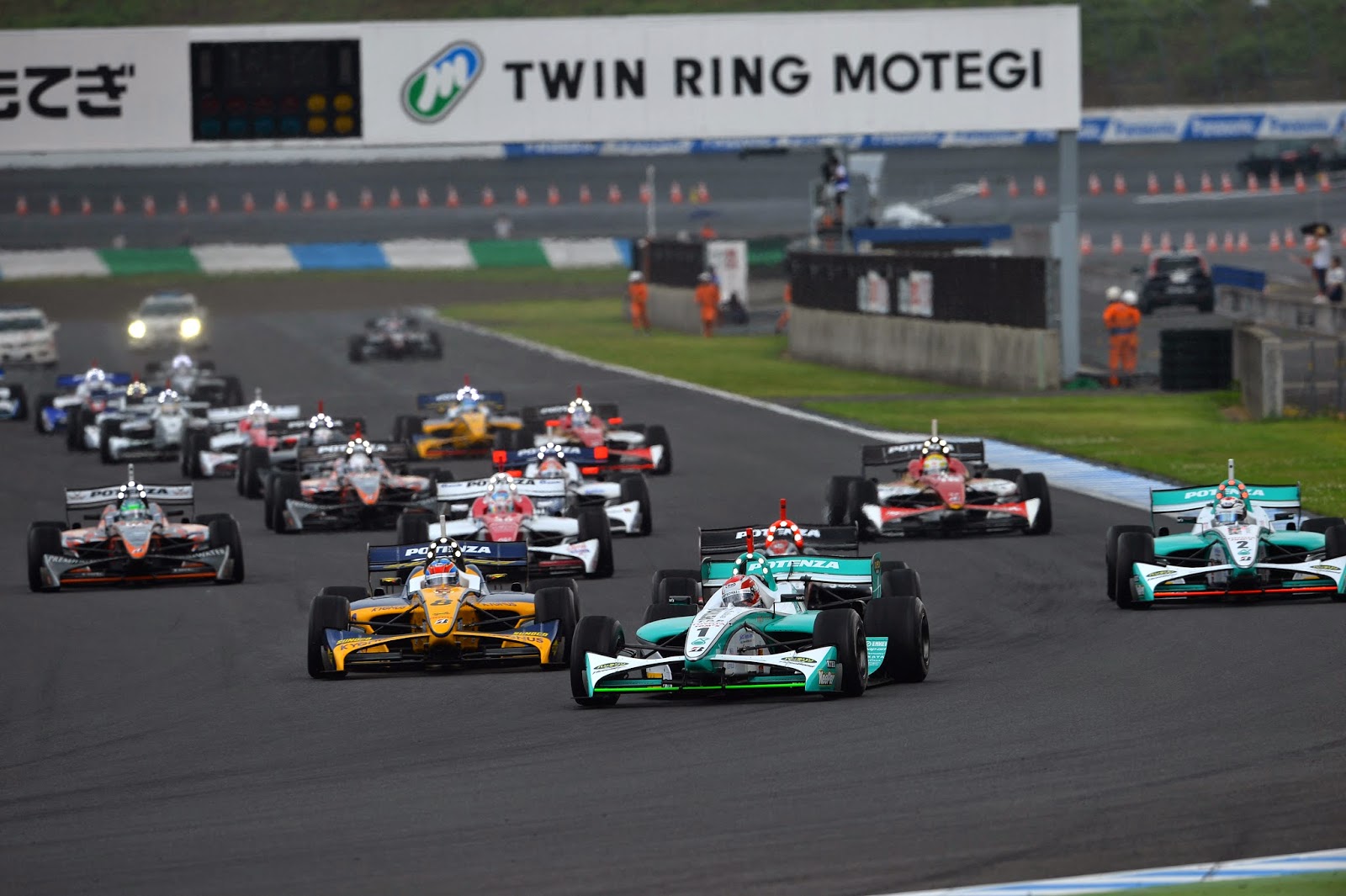
The Super Formula grid races away from the line at Twin Ring Motegi in 2013. Photo sourced from http://www.supergtbrasil.blogspot.co.uk

Japan is so attractive right now for young drivers as it promises the opportunity to become a professional racing driver rather than struggle to attract finance to continue on the young driver ladder in Europe. Alongside the chance to earn a professional driver there are also copious chances to link up with a manufacture, with Toyota running a LMP1 programme in the WEC, with Nissan joining them in LMP1 this year also. Honda is also returning to F1 and has links with Indycar also, with all of these manufactures assisting or running teams in the Super GT series. Japan is therefore the perfect shop window for young drivers to put themselves in should they wish to put aside their dreams of F1 and become a factory driver for a distinguished manufacture. The future seems increasingly bright for the Japanese racing scene, as it becomes increasingly prominent in international motor sport, returning it to it’s glory days of the past.

What are your thoughts on this article? Please feel free to leave any comments below good or bad.

F1 pre-season testing first observations

This week has seen the 2015 Formula One season roar back into life with the first pre-season test ending today at the Jerez circuit in southern Spain.  With the last of the four days of running winding down as I write this, now seems a perfect chance to assess the first impressions of all the cars running this week. Although I am aware that usually at this point of the season, little can be correctly predicted for the upcoming opening Australian Grand Prix in March, some things can be learned from the team’s running these past four days.

Firstly, let’s look at the dominant 2014 Constructers and Drivers champions AMG Mercedes, who revealed their 2015 MGP W06 on the morning of the first day’s running last Sunday. Over the four days both Lewis Hamilton and Nico Rosberg have completed over 400 laps and counting, and whilst the team has not grabbed the headlines with their times, their consistently competitive times leave them in good shape for Melbourne.

Whilst the team have suffered some reliability problems, with only problem free day’s running from the four. It seems these problems were small issues however, with a water leak and a spin stopping Hamilton and day’s two and four, whilst an engine shutdown on track stopped Rosberg on the afternoon of day three. In overall terms, it still seems very likely AMG Mercedes will be dominating the opening races of the season, although the rest appear to be making ground on them based on this first test.

Nico Rosberg leaving the pits at Jerez. Photo credit goes to Motorsport.com

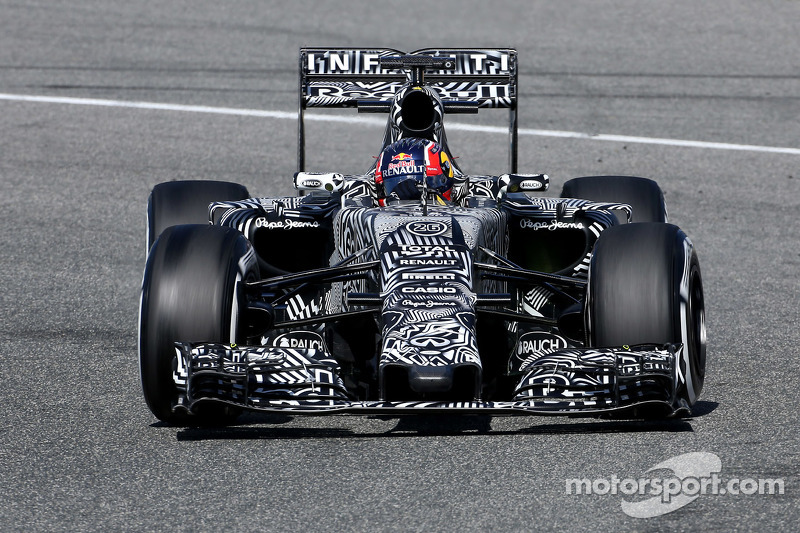
Next up is Red Bull Racing, a team that this week gained headlines this week when they revealed their Red Bull RB11 car on Sunday morning before the first day’s running in a black and white camofluage livery. This practice is common with prototype road cars and race cars, as it makes it very hard to identify subtle design features with the new design.

The team has suffered a troubled test, with an off from new driver Daniil Kvyat costing the team their only new spec front wing, and therefore some relevant running on the second day of the test. Engine issues have also curtailed their running on the third and fourth days of this first test.

Whilst the team have began the 2015 season a lot better than they did a year ago, the team have suffered some reliability problems which have limited their running. When the car has been running it has shown some pace, although it appears their claim to be the closest challengers to AMG Mercedes may have been lost to both Williams and Ferrari based on this test.

Daniil Kvyat in action, displaying the striking black and white camouflage of the Red Bull RB11. Photo credit goes to Motorsport.com

Williams were the first team to fully launch their new car in January, although the definitive FW37 didn’t appear until the first test in the flesh, with the team releasing a CFD computer image of the car in January. The team has had a very productive and low key first test, much like engine partner Mercedes.

The team have not suffered any reliability problems during the four days, and have set some competitive lap times also. Whilst the team have hovered around the top four times each day, the team have not stole any headlines with their pace so far. It seems the team have once again produced a quick and reliable car, and it appears they will join Ferrari in taking the challenge to AMG Mercedes for most of this 2015 season. Watch out for Williams to take a win this season.

Felipe Massa putting the new Williams FW37 through it’s paces this week. Photo credit goes to Motorsport.com

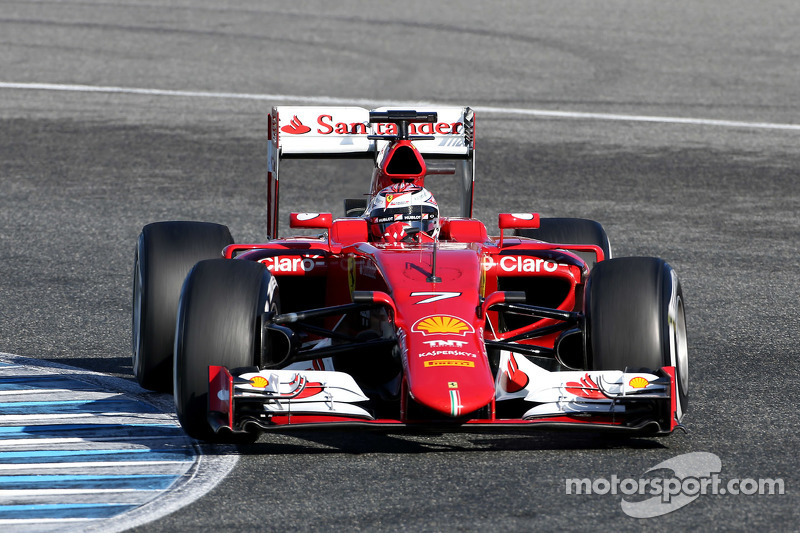
Ferrari released their SF15T in January to much attention, as their tumultous 2014 season instigated a complete overhaul during the year, with the team playing down expectations this year as talk of a major transition for Ferrari over the next few year intensified. So far in this first test the team has been the biggest surprise so far, as new star driver Sebastien Vettel and Kimi Raikkonen have regularly topped the times over the four days, with only the Sauber of Felipe Nasr stealing their thunder on day three.

The car have looked more aerodynamically efficient, with a seemingly more powerful engine also giving the team quiet optimism going into the 2015 season. Whilst the team may well be using low fuel and soft tyres runs to gain the headlines and keep the relentless Italian media happy, it does appear the team have made a big step forward from an awful 2014 season.

It seems Ferrari may well be regularly challenging for podiums again this year, and don’t be at all surprised if they claim a win and more this season with the talent of Vettel and Raikkonen at the wheel. Watch out for the prancing horse to head upward this year.

Kimi Raikkonen at the wheel of the new Ferrari SF15T. Photo credit goes to Motorsport.com

McLaren are another major team going through a transition year seemingly in 2015, as the team welcomes back both Fernando Alonso and Honda. The team were playing down expectations for their star acquisitions in the build up to pre-season testing, and it appears they were right to do so after trouble with the Honda engine.

After a very poor first showing for the engine in the Abu Dhabi post-season test late last year, the team has carried it over to Jerez as the team have suffered engine problems on all four days, severely limiting their time on track. Jenson Button completed the most laps with 35 on the final day. Whilst this suggests the team is making progress every day, in comparison with the other team in Jerez this leaves them in a serious disadvantage going into the start of the season.

When on track the car has shown promise and it does seem once the team get on top of the engine, the team will be fighting for podiums. Look for McLaren to come on later on in the season, with podiums a possibility in the second half of the year. Until then it will be a tough first half or even whole year for world champions Jenson Button and Fernando Alonso.

Jenson Button giving a rare glimpse of the McLaren MP4/30 on track at the first test in Jerez. Photo credit goes to Motorsport.com

Sahara-Force India should be next up, as I’m previewing each team in order of Constructers position in 2014, although the team decided to miss the first test in Spain. The team initially wanted to bring the 2014 car and sell the seat to a young driver, although with no takers the team stayed at home.

Whilst they initially planned to join the two tests in Barcelona, it now appears the team may not appear until the final test. The team has also scotched rumours it was running seriously behind schedule and could miss the Australian GP. For now the team have only revealed their 2015 livery, with drivers Sergio Perez and Nico Hulkenberg surely itching to get their hands on the new VJM08 car.

Team owner Vijay Mallya along with 2015 drivers Sergio Perez and Nico Hulkenberg launching the new livery for the team this year. Photo credit goes to F1Fanatic.com

Scuderia Toro Rosso are a team looking to move up the grid this year, something they hope their new STR10 car will be able to give them. The team has ambitiously targeted fifth in the constructers points, and if they can achieve that it will be one of the talking points of the season.

The team ran a quiet programme in the first test, focusing on giving rookie drivers Carlos Sainz Jr and Max Verstappen as much seat time as possible as they look to get acquainted with F1 before the opening Grand Prix in Australia next month. The car has ran reliability, barring a stoppage for Sainz Jr on the afternoon of the opening day of the test.

Both drivers have been able to put in some solidly quick laps, something which prematurely suggests the team has made an improvement over last year. Expect this team to be fighting for points on a regular basis this season, especially once both drivers start to gain experience and feel comfortable in F1.

Max Verstappen learning the new Scuderia Toro Rosso STR10. Photo credit goes to Motorsport.com

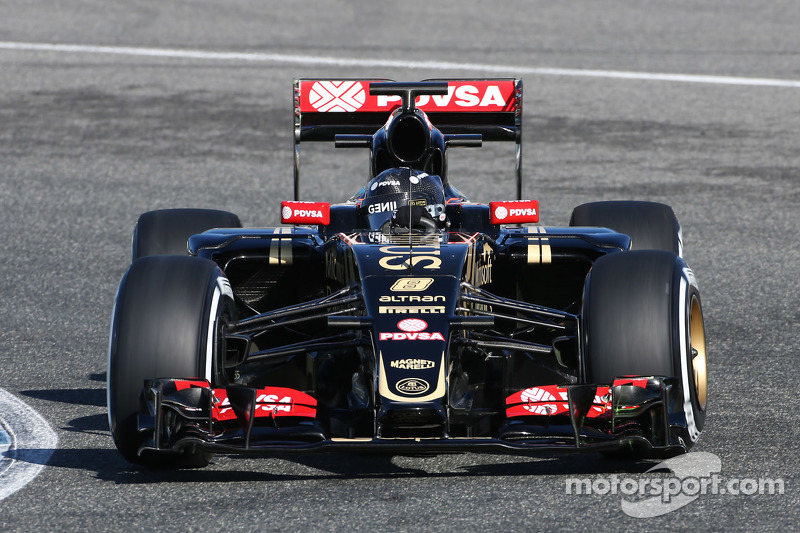
The Lotus team are another team looking to move up the grid this year, as it seems the team have managed to solve the problems that severely inflicted them as they suffered a hugely disappointing season by their high standards. The budget problems that de-railed them last year appear to have been solved, and the under-powered Renault engine has been ditched for a Mercedes engine too.

Lotus suffered a fraught beginning to the test, with the car only being fired up for the first time at 4am on Sunday Morning. The team rushed over to Jerez where they amazingly managed to be out for the second day of the test on Monday. Unsurprisingly with such a late schedule, the car suffered some reliability problems during the test, although the team were still able to get a decent amount of laps in as they found their way with the new E23 car.

The team are aiming for a third or fourth placed finish in the constructers championship, their pace and reliability so far in the first test suggest this may just about be an achieveable target, something that would delight the team after a very hard 2014 season.

Romain Grosjean in action with the newly Mercedes powered Lotus E23. Photo credit goes to Motorsport.com

Whilst Marussia are next up, and I should be talking about their progress in Jerez, events over the off-season mean I can only write about their recovery plan after going into administration late last year. It initially looked as if the team was dead, although the recent news has only been positive regarding the team. Firstly the auction of all their key equipments such as tools and the cars themselves was cancelled at the last minute, and it now appears the team will come out of administration on February 19th.

The team has an entry for this year under the Manor Grand Prix name, so theoretically the team could compete with last year’s car, although a lot of work and money still has to be found for the team to make it on the grid in Australia next month. Whilst I sincerely hope they can resurrect the team and continue in F1 this year and beyond, time is fast running out for the plucky British team.

Last up is the Sauber team, who suffered a dreadful 2014 season, their first ever season without scoring a point since they entered the sport in 1993. A lot has changed from last year with financial concerns a factor in the decision to dump Adrian Sutil and Esteban Gutierrez for Marcus Ericsson and Felipe Nasr.

The C34 car for this year is a classically conventional Sauber design, and the team has been the revelation of the first test, as the car has ran reliably throughout the four days. The team’s only drama was a driver error from Marcus Ericsson who spun on the first day of the test. Alongside a significant amount of laps completed on all four days of the test, the team has also shown a turn of pace as they have regularly challenged Ferrari for the top spot each day.

After missing out on the first two days, it was third time lucky for the team as Felipe Nasr’s soft tyre run set the fastest lap on day three of the test. Whilst the team has denied deliberately going for low fuel runs to grab the headlines in testing, I would be shocked if the team were in the same position come the Australian GP. The team will be hoping to capitalise on their reliability to score points throughout the year, something that would be a marked improvement on last season for the popular Swiss team.

Marcus Ericsson putting laps in the Sauber C34 in Jerez. Photo credit goes to Motorsport.com

The Formula One season feels like it’s slowly cranking up with this first test, and I simply cannot wait now for the second and third tests in Barcelona coming up, where plenty will be further revealed going into the Australian Grand Prix. Finally photo credit for all the amazing photos in the article goes to Motorsport.com , please feel free to check out their high quality photos and up to the minute news. Please also feel free to comment below.
Cycling’s Dark Era Part 3 2006-2010

After several years whereby a number of riders had been suspended after testing positive for performance enhancing drugs, including high profile riders such as Grand Tour contenders David Millar, Tyler Hamilton and Roberto Heras, the cycling world was engulfed in another major doping scandal during the 2006 season.

The Operacion Puerto scandal had began innocently enough when vengeful ex-rider Jesus Manzano voiced to the public the doping practices of his Kelme team, of which the Spanish Dr Eufemiano Fuentes was the team doctor. This prompted an investigation into the allegation by the Spanish Guardia Civil, which led to the arrests in early 2006 of several key players in the organised doping ring including Fuentes.

From here the investigation rocked cycling to it’s core on the eve of the 2006 Tour de France, with numerous contenders for victory being suspended after being implicated in the Puerto investigation. It became clear Fuentes had been working with a large majority of professional riders as it was revealed he was officially linked with 56 cyclists, with numerous others likely to have been associated with Fuentes but not implicated in the investigation. Fuentes also appeared to work with tennis players and footballers, remarking at his trial “If I would talk, the Spanish football team would be stripped of the 2010 World Cup.”

Those sent home included Team CSC team leader and 2006 Giro D’Italia winner Ivan Basso, who was later sacked by the team later on in the year. Three time Tour de France podium finisher Joseba Beloki was also sent home after being implicated, although he was soon cleared by Spanish officials in 2006. Team Telekom leader and 1997 Tour de France winner Jan Ullrich was sent home and this investigation effectively ended his illustrious career. Other top line riders implicated included the already suspended Tyler Hamilton, Jorg Jaksche and Alejandro Valverde.

Jan Ullrich was a constant thorn in the side of Lance Armstrong between 2000 and 2005, although Ullrich’s career would end in shame as he was implicated in the Operacion Puerto doping investigation on the eve of the 2006 Tour de France. Photo credit goes to REUTERS and was sourced from http://www.telegraph.co.uk/sport/othersports/cycling/lancearmstrong/9604956/Lance-Armstrongs-seven-Tour-de-France-victories-wont-be-re-attributed-to-other-riders-says-Christian-Prudhomme.html

From here the UCI and organisers of the Tour de France were hoping for a scandal free Tour de France as Operacion Puerto dominated the headlines in the build up and first few days of the 2006 Tour. Of the contenders left American Floyd Landis shocked everyone with a phenominal Stage 17 effort to recover almost all of eight minutes he had lost the previous day to Oscar Pereiro.

It was therefore no surprise that in the initial testing after that stage Landis tested positive for abnormally high levels of testosterone, eventually leading to him being fired by his Phonak team  and being stripped of his Tour de France victory a year later. Oscar Pereiro inherited the victory as cycling licked it’s wounds after a disastrous 2006 season.

Landis celebrating his 2006 Tour de France triumph, although a positive drug test would soon be revealed and Landis would be both fired from his Phonak team and stripped of his Tour victory a year later. Photo credit goes to unknown.

2007 was similar to the year before with several doping cases in the build up to the 2007 Tour de France. The 2007 Giro D’Italia winner Danilo Di Luca was under investigation for doping and would later join 2006 Giro winner Ivan Basso in being suspended from cycling.

From here T-Mobile rider Patrik Sinkewitz was found to have tested positive for EPO in the build up to the Tour and was soon fired by the T-Mobile team before admitting to using EPO and blood transfusions in the past. From here the next scandal broke when pre-race favourite Alexandre Vinokourov and his Astana team were forced to withdraw from the Tour after it was revealed Vinokourov had tested positive for receiving a blood transfusion before stage 13 individual time trial, a stage he won. Team mate and top 10 contender Andrey Kashechkin later also tested positive for the same offence, leading some to speculate a mix up amongst the team led to each rider being transfused with each other’s blood.

The final and most dramatic scandal of the Tour occurred late on race leader Michael Rasmussen was withdrawn by his Rabobank team after it was revealed the Dane had lied to the team and doping officials by claiming he was in Mexico in June when he was spotted by an Italian cycling journalist training in Italy. This was to avoid being tested before the Tour and therefore led to his dismissal from the race and the team.This left Alberto Contador to claim victory in a hugely tumultous 2007 Tour de France, whereby several high profile doping cases once again battered the credibility of cycling’s greatest race.

Dane Michael Rasmussen celebrates after claiming a stage victory in the 2007 Tour de France, although he would later be removed from the race by his Rabobank team after lying to avoid doping tests before the Tour when only days away from winning the race. Photo credit goes to Peter Dejong and AP.

Thankfully for the UCI and cycling fans 2008 was a quiet year for doping within the pro peloton, although there was still a motley crew who were found to have tested positive during the year. The majority were found to have tested positive during the Tour de France, with many testing positive for MIRCERA, a third generation form of EPO. Of those to have tested the most high profile was stage 10 winner Leonardo Piepoli, although the Liquigas team were also forced to leave the race after one of their riders tested positive for EPO.

It appears that the new anti-doping regulations implement by the UCI have began to make a difference within the peloton, as the new, far more invasive measures leave riders little room to use performance enhancing drugs. Riders now have to give base values for things such as their hematocrit and blood levels, therefore it’s now a lot easier to detect when a rider has enhanced these levels unnaturally through performance enhancing drugs.

Alongside this riders now have to provide quarterly information to the UCI detailing their whereabouts every day and inform the UCI if there whereabouts changes during this period. It has become impossible for riders to successfully dope for a long period of time without being caught, and the public are now finally renewing their faith in cycling.

The last two years of the decade passed relatively free from scandal, although some riders were falling foul of the biological passport initive, leading to mandatory two year suspensions from the sport. Whilst the highly controversial Lance Armstrong returned to cycling in 2009, even his presence wasn’t enough to start a doping scandal, although a later USADA (United States Anti-Doping Association) report made it clear based on their evidence that Armstrong had completed a blood transfusion during the 2009 Tour de France.

From here the only major scandal to hit pro cycling during this period concerned the 2010 Tour de France winner Alberto Contador. It later became known after the Tour that Contador had tested positive for a small amount of Clenbuterol, which provides breathing assistance, with Contador claiming to have ingested the drug through contaminated meat he ate during the Tour.

Whilst he protested his innocence and raced on whilst a verdict on whether to suspend him was made, Contador was eventually suspended in 2012 and his results between 2010 and 2012 would be annulled, which meant he would be stripped of his 2010 Tour de France and 2011 Giro D’Italia victories.

Alberto Contador celebrates his victory on the 2010 Tour de France podium, although he would later be stripped of this victory. Photo credit goes to Graham Watson and GrahamWatson.com.

In this later period of the first decade of the new millenium, it appears cycling has finally turned a corner with riders no longer being found to have tested positive en masse. Whilst the opening year of this period began with the Operacion Puerto investigation, by 2010 it appeared the cycling community can finally hoist the winners of it’s great races as true winners, instead of seeing them through the eyes of suspicion as to how they won. Despite Contador being found to have tested positive for Clenbuterol in 2010 it appears this was an honest mistake. From here every Tour de France winner since has been free of doping scandal during their victories, something which is both refreshing and much needed within the cycling community, as it looks to recover from a very dark era for cycling and it’s credibility.

Cycling’s Dark Era Part 2 2000-2005

Let me start part 2 of this blog entry by setting the scene from the previous few years of cycling. After the nightmare 1998 Tour de France, everyone involved was thrilled to have a relatively controversy free 1999 Tour de France whereby the public were very happy to support cancer survivor and fundraiser Lance Armstrong as he completed a fairy tale comeback to win the Tour.

What the public didn’t know however was that Armstrong was using suspicious doctor Dr Michele Ferrari to support him with an organised doping programme, which included Armstrong’s gardener following the Tour throughout the three weeks on his red motorbike, ready to deliver banned performance enhancing substances such as EPO to Lance and several other team mates. Whilst the public saw and the organisers pushed forward the ideal of a new clean, era of professional cycling started by Lance Armstrong, the truth was that cycling was entering it’s worst ever period of doping.

The new millennium was the completion of a transition within doping, as gone were the days of the teams running professional doping programmes for their riders, who were forced to sort out their doping themselves now as the teams wanted no part of it after the Festina affair in 1998. 2000 also saw the UCI finally make a step forward to curb the rampant doping, with a new test being developed to detect EPO. The test was initially put in place for the 2000 Olympics in Sydney, although it was then used in the 2000 Tour de France.

Armstrong’s doctor Dr Michele Ferrari was always kept up to date with the latest tests being developed to curb doping, therefore with the advent of a new EPO test Lance and his United States Postal Service team shied away from using EPO during the Tour, instead choosing to use a more old fashioned and natural performance enhancer: blood transfusions.

Whilst this wasn’t a new technology, taking out a blood bag several weeks before the Tour and then infusing it back in during a crucial part of the Tour would provide a natural boost in red blood cells which was also very hard to detect. With this innovation in cycling Armstrong and several team mates followed this process in the weeks leading up to the Tour. Armstrong’s team mate Tyler Hamilton speaks of this in his brilliant book The Secret Race where he states after winning a key warm up race for the Tour the Criterium Dauphine Libere only days before doing the transfusion, and struggling to ride up a small hill in the aftermath of taking out a blood bag.

The 2000 Tour de France was once again free of major doping scandal as Lance Armstrong successfully defended his 1999 Tour de France triumph over Jan Ullrich and Joseba Beloki. The sport appeared to be cleaning itself up after two relatively quiet years in terms of riders being busted for doping, although this would all change with the advent of the new EPO test.


Armstrong in action during the 2000 Tour de France.

Thanks to http://www.abc.net.au/news/2012-08-24/lance-armstrong-rides-in-the-2000-tour-de-france/4221010 for the image.

2001 saw several riders test positive for EPO, with the first ever being prominent Danish rider Bo Hamburger, although he would later be acquitted after irregularities with his B sample. The 2001 Giro D’Italia would also be marred with doping scandals. Leading contender Dario Frigo would be expelled from the race after police found banned substances when searching several teams hotels. Police uncovered a significant amount of doping products as they searched riders from all 20 teams, leading to several riders being thrown out of the race.

This would prove to be the only major doping incidents during the 2001 season, as Armstrong raced to a third successive Tour de France title. 2002 would be more of the same as both previous winners of the Giro D’Italia Stefano Garzelli and Gilberto Simoni would test positive for drugs and face suspensions. 2002 also provided a perfect snapshot of the lack of concern around rampant doping in cycling as the UCI failed to strip 3rd place rider Raimondas Rumsas of his podium position in the Tour de France despite his wife being found with vast quantities of performance enhancing drugs including EPO and growth hormone. His wife explained the drugs were for her mother in law. Rumsas would later be banned for one year in 2003 after testing positive for EPO during that years Giro D’Italia.


Raimondas Rumsas on the podium at the end of the 2002 Tour de France on the far right in 3rd place overall.

Thanks to L’Equipe for the photo http://www.lequipe.fr/Cyclisme-sur-route/Diaporama/Un-palmares-a-recreer/254

2003 would look from the outside like any other year with a number of riders being banned for doping, although it would have much wider implications as Jesus Manzano retired from cycling and turned whistle blower with the Spanish Guardia Civil, who’s investigation became known as Operacion Puerto. After becoming disillusioned with cycling he was fired by his Kelme team, Manzano turned whistle blower to the doping practices of the team, which included blood transfusions and various injections of performance enhancing drugs, in co-operation with Spanish doctor Dr Eufemiano Fuentes.

The team doctor for the Kelme team would later become synonymous with doping, much like fellow former cycling team doctor Dr Michele Ferrari. For now all the allegations were strenously denied, although these allegations refused to go away. 2004 was another bad year for doping with two well known riders being suspended. Firstly the Brit and former yellow jersey holder in previous Tour de France races David Millar was suspended for two years after police searched his house and found doping products. Millar admitted to using EPO three times in previous years and was banned until 2006.

American and former Tour de France contender Tyler Hamilton was also suspended for two years after testing positive for a blood transfusion both after winning the gold medal in the 2004 Olympics men’s individual time trial and during the 2004 Vuelta a Espana. After initially denying his positive tests, once his front line career was over once he returned to cycling he admitted to using performance enhancing drugs in his brilliantly honest book The Secret Race.

Tyler Hamilton on the podium celebrating his 2004 Olympic gold medal. This would later be stripped from him after testing positive for a blood transfusion twice in the ensuing moths. Photo credit goes to Greg Wood of  AFP/Getty Images. Sourced from http://sports.nationalpost.com/2012/08/10/tyler-hamilton-officially-stripped-of-2004-olympic-gold-medal-in-cycling/

2005 was another run of the mill year with several riders being eliminated from the Tour de France for doping, whilst Vuelta a Espana specialist Roberto Heras was stripped of his win in the 2005 Vuelta after testing positive for EPO that year on stage 20. He was stripped of his record breaking fourth win in the Vuelta a Espana, before being reinstated in 2012 after procedural errors with the testing.

As the Lance Armstrong era came to a close in 2005, the world of cycling was still being barraged with doping scandals which seriously undermined the heroics presented to the fans and TV audiences by the riders. Whilst the UCI hoped to ride out the storm, little did anyone know the fuse on another major doping scandal was about to blow up in their faces. Please stay tuned for part 3 coming up soon.

Cycling’s dark era

Professional cycling and performance enhancing drugs. For almost two decades these went hand in hand as the sport was ravaged by a wild west era of professional doping programmes, in which the sport lost almost all it’s credibility and those who cheated prospered whilst those who chose to remain clean rotted on the outer reaches of success in the sport they loved.

Doping has always been a problem in professional cycling, as athletes faced with three weeks of immense physical pain have always looked for ways to numb or dull the pain. In the early days cyclists would use alcohol to numb the pain, however from the 1950’s onwards recreational drugs such as amphetamines become the latest technology in doping. Amphetamines were common place during the peloton for the next 30 years, although whilst they would give riders extra energy they would also alter their thinking and often led to ridiculous breaks which were never successful.

During the 1980’s amphetamines were prevalent in the pro peloton, although not every one was using performance enhancing drugs. One of those include ex-pro rider Theo de Rooij, who states in an interview with http://www.theouterline.com his own experiences with amphetamines ” That stuff made me do crazy things; it made me feel strong, but I also realized that the stuff was very addictive, so I decided to stay away from it.” (ed: For more information on doping check out their amazing article series called Perspectives on doping!)

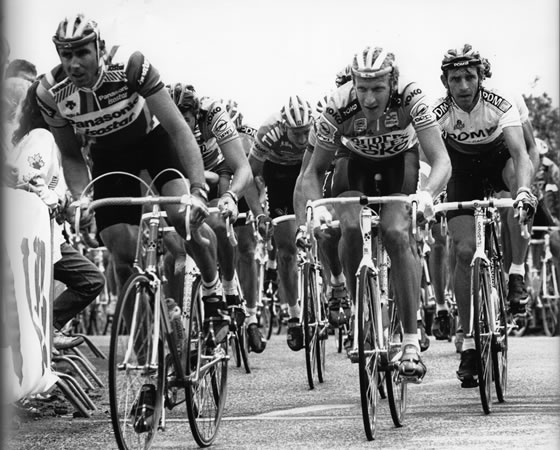
De Rooij in action during his pro career in the 1980’s.

The game changer in performance enhancing drugs was the development and abuse of EPO. This drug which boosted red blood cells in blood and designed for people with anaemia (low blood count), it was tailor made for endurance athletes such as professional cyclists. Pioneered by Italian riders during the early 1990’s it’s use quickly became widespread, with a sworn secrecy over it’s use leading to increasing doses as riders became paranoid of other riders using more doping products to enhance their performance and gain an advantage on the peloton.

During the 1990’s it truly was the wild west in terms of doping as huge quantities of EPO were used and abused to enhance performance. EPO was a game changer not only because of it’s ability to greatly enhance your own performance, but because it was impossible to be caught using it as throughout the 1990’s there was no test available to detect EPO. EPO quickly became the holy grail of doping as a large majority of professional team set up an organised doping programme using highly sophisticated and knowledgable doctors, alongisde high tech equipment to give them an edge over the rest.

At the time the UCI, cycling’s governing body, both seemed to have little resources and interest in properly investigating systematic doping in cycling. By the mid-1990’s the first obvious signs of doping distorting race results became clear, with examples being the “miracle” three man break from the Italian Gewiss-Ballan team, that simply powered away from everyone else on the final portion of the race to claim a 1-2-3 at Fleche Wallone in 1994. After the race team doctor Dr Michele Ferrari made his infamous quote about EPO “EPO is not dangerous, it’s the abuse that is. It’s also dangerous to drink 10 liters of orange juice.” It’s probably no coincidence that Dr Michele Ferrari later became synonymous with EPO and doping, as he was a major factor behind the dominance of Lance Armstrong and the United States Postal Service team as they won 7 straight Tour de France title between 1999 and 2005.

Youtube Footage of the infamous Stage 16 Hautacam climb made famous by Bjarne Riis in 1996.

Another example is the apparent ease with which Danish rider Bjarne Riis was able to tackle the infamous Hautacam climb in 1996. During the later stages of the 1996 Tour de France the riders approached the notoriously tricky Hautacam, known as one of the most challenging climbs in world cycling, yet TV footage showed Bjarne Riis riding it like a Sunday afternoon relaxing training ride. He repeatedly launched himself from the peloton before slowing and allowing the group to catch him again before repeating the process several times. Eventually Riis broke away for good and claimed the stage win comfortably, although his actions were peculiar to many cycling experts as his process of riding hautacam defied convention. 11 years later the public discovered his secret to victory that day as Riis announced he had used performance enhancing drugs including EPO during his career.

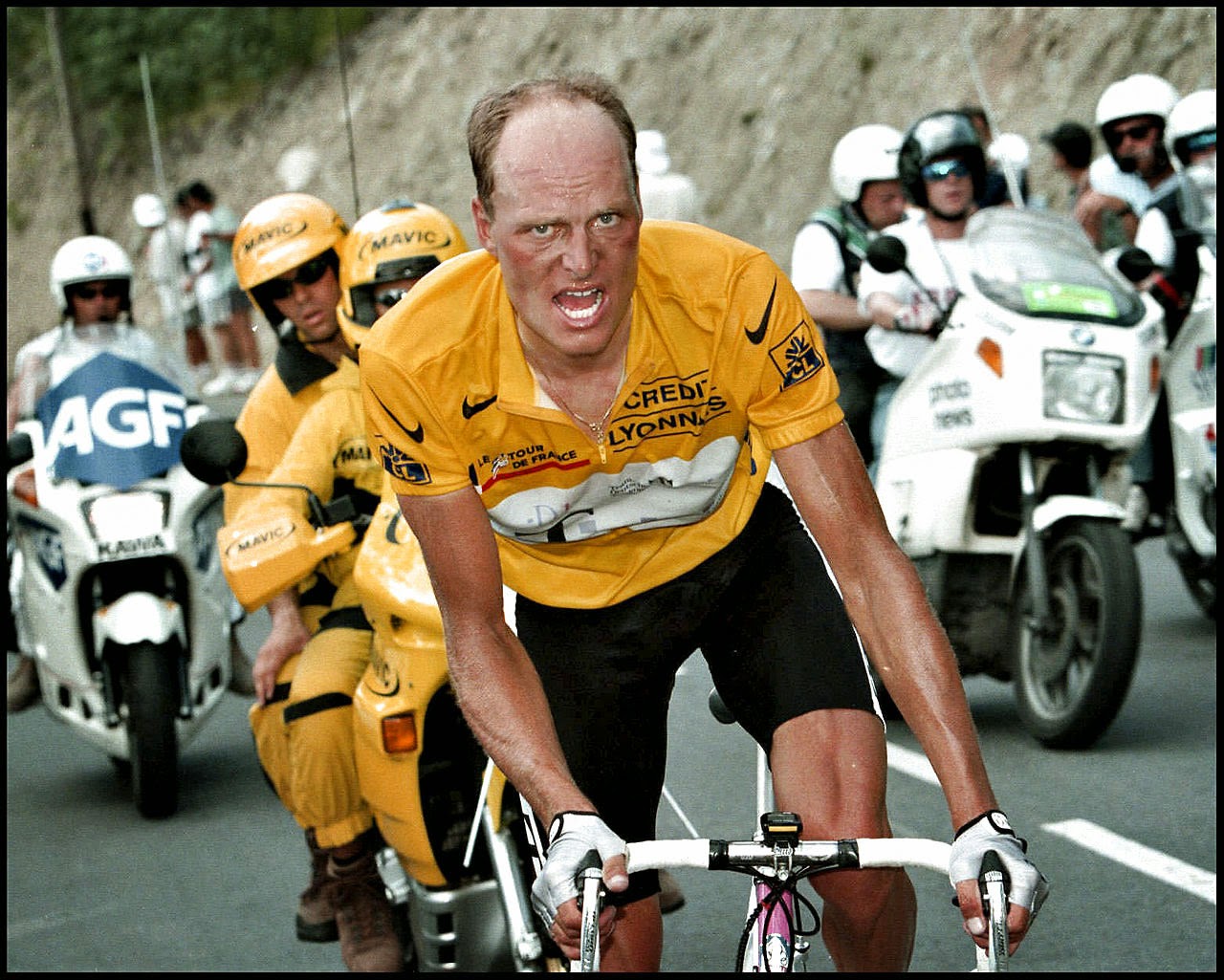
Bjarne Riis shows the pain of his 1996 Tour de France victory.
Sourced from https://leagueofbikes.wordpress.com/2012/10/25/bjarne-riis-hautacam-1996/3acdc4b4a3184a59956bbd432998c716_400/

By 1997 the UCI finally took action against rampant doping in cycling, by implementing a 50% limit for riders hematocrit, a.k.a the amount of red blood cells they have in their blood. Some counter however that infact the teams themselves came to the UCI pleading them to implement some measure as they deemed the riders doping to be getting out of control. Whoever implemented the measure it did have an affect in curbing doping slightly, as gone were the days of Bjarne Riis winning the Tour de France with a hematocrit of 60% and over.

Hematocrit is vital to cyclists and endurance athletes as the more red blood cells you have, the more oxygen you have being carried to the muscles. This means your less likely to fatigue or get lactic acid build up in your muscles. Therefore, if you can perform at your peak for longer than your rival it’s likely you’ll be able to beat them. For cyclists this became the holy grail in the 1990’s, with a normal persons hematocrit likely to be between 40-45%, however for cyclists before 1997 regular use of EPO and other performance enhancing drugs such as testosterone, Human Growth Hormone and Cortisone would boost their figures to between 55-65%.

The UCI implemented the 50% ruling as a “health measure”, therefore when riders were caught with a hematocrit over 50% they were simply suspended for two weeks before being reinstated. From here the status quo remained until July 1998. The Tour de France was eagerly anticipated like any other Tour, however in the days prior to the start in Ireland, a chain of events began which would lead to a complete change in the doping culture of professional cycling. The most successful team in the 1998 Tour de France was the Festina team. Packed with top line riders it was likely one of their riders would win the Tour de France. This would soon change however as team soigneur, effectively a team helper, Willy Voet was stopped by French customs in Belgium as he tried to enter France through a small border crossing by Lille.

A routine check of his Festina team car found an insane amount of doping products within, which included 234 capsules of EPO, 82 vials of Human Growth Hormone, 160 capsules of testosterone and various other doping products. After the team at first distanced themselves from Voet, it soon became clear everyone from the team would be questioned once they returned to France. Once it became clear French police had uncovered a systematic doping programme on the Festina team, directeur sportif Bruno Roussel and team doctor Eric Rijckaert were forced to end their denials and admit to a systematic doping programme on the team, which was later discovered to have been funded by the riders. From here all the key players from the Festina team were questioned by police, including star riders Alex Zulle, Richard Virenque and Laurent Dufaux.


Virenque clearly bewildered at the 1998 Tour de France.
Sourced from http://www.cyclingnews.com/news/virenque-hopes-french-senate-list-includes-festina-riders

The team would be subsequently thrown out of that year’s Tour de France and all riders apart from Virenque would admit to doping. From here French police searched other teams at the tour and found doping products at almost all the teams. In turn the riders protested about their harsh treatment by police and stage several protests during stages whereby the riders would deliberately ride slowly or even stop for several hours. In the end the incredible victory for the Italian Marco Pantani, who also won the Giro D’Italia that year also, was overshadowed by the ongoing Festina affair.

From here things settled down again, with the next major storm surrounding the Italian Marco Pantani. After winning two of cycling’s biggest races in the Giro D’Italia and Tour de France in 1998, Pantani looked for a repeat in 1999 as he dominated the Giro. Only days before the end however, he fell foul of the 50% limit of the UCI and was suspended for two weeks. Although this created many news headlines, the significance in the story was whether he had been set up and did center on doping like the Festina affair had.

http://blogs.as.com/.a/6a00d83451bf7069e201a5116e3fb0970c-450wi
Pantani being led away by police after his expulsion from the 1999 Giro D’Italia.
Sourced from an AS blog http://blogs.as.com/pedaladas/2014/02/las-ense%C3%B1anzas-del-pantani-valiente-y-del-pantani-oscuro.html

After the Public Relations disaster that was the 1998 Tour de France over, the UCI and Tour organisers were eager to renew the public’s faith in the race for 1999. They both promised a slower race to show they were curbing doping in cycling. Little did they know however that their biggest problem around doping were just about to begin as Lance Armstrong was coming back to the Tour and was determined to claim victory, whichever way possible. For more on this story please view my second part to this blog entry which will be posted in the next few days. Hope you enjoyed it!

McLaren have best driver problem in F1

Whilst teams like AMG Mercedes try to work out how best to keep their drivers in line next year, and others like Red Bull and Ferrari adapt to new driver line up’s, McLaren currently have the best driver problem on the grid for the next few years. Whilst today’s announcement of Fernando Alonso and Jenson Button will lead to questions as to how the two, and especially how Fernando Alonso and Ron Dennis can work together effectively after a tumultuous 2007 season. The team now has an extensive amount of experience which will greatly help the Honda engineers in their debut season, with two very quick young drivers waiting in the wings for the future.

Alonso returning to McLaren for next year would have been laughed at before the 2014 season, however this shows how crazy a season it was as Alonso managed to escape a Ferrari team in transition, with a return to McLaren providing promise of potential wins and further championships for the 33 year old Spaniard. His return to a McLaren team once again spearheaded by disciplinarian Ron Dennis will be an interesting sub-plot to the 2015 season, however both have matured and changed since 2007 therefore a return to the days of a broken relationship between the two is unlikely to occur.

As for Jenson Button, he was forced to sit on the sidelines and wait for an extraordinary amount of time as McLaren deliberated over whether to retain his experience for a crucial first year for the new Honda engine next year, or whether to start planning for the future by placing promising rookie Kevin Magnussen alongside Alonso. This morning McLaren finally announced their decision to retain Jenson Button, although it appears he’s been forced to take a pay cut for next year and it’s rumored the team have signed him to a one year deal.

http://www.motorsport.com/all/photo/main-gallery/yasuhisa-arai-head-of-honda-motorsport-jenson-button-kevin-magnussen-fernando-alonso-a/?a=459589
All smiling faces at today’s announcement as Alonso and Button are confirmed at McLaren-Honda next year.

Whilst both Fernando Alonso and Jenson Button will be thrilled everything is finally confirmed, meaning they can now fully focus on the 2015 season and the beginning of a new works partnership with Honda, McLaren will also be rubbing their hands with glee over both their current plans extending into the future. For the next few seasons, the team arguably has the best driver line up in F1 with three world championships and 27 years of F1 experience between them going into the 2015 season. This experience and competitive determination will greatly benefit the development of the new Honda turbo next year.

Going into the future with a driver line up comprising 33 year old Fernando Alonso and 34 year old Jenson Button, McLaren have clearly been forced to plan for the future when these two incredible drivers decide to retire from Formula One. This is the brilliant problem McLaren have as they already have two very quick young drivers on their books who could adequately carry on the McLaren-Honda project in the future.

http://www.motorsport.com/f1/photo/main-gallery/kevin-magnussen-mclaren-f1-192/?sz=9&s=-6&oft=821&id=1792681&i=806
Kevin Magnussen in action for McLaren during the season ending Abu Dhabi Grand Prix last month.

Kevin Magnussen had an impressive debut season in F1 this year, and whilst we rightly feel hard done by that he’s not on the grid next year, will be aware of the wider implications and the opportunity he has at McLaren if he stays in his current position for a year or two more. Alongside Magnussen McLaren also supports the highly promising young Belgian driver Stoffel Vandoorne. Whilst that name won’t mean anything to the majority of casual F1 fans, Vandoorne has impressed in every category he’s raced in, including a hugely impressive 2nd in the standings during his debut year of GP2 racing this year. A second season in GP2 looks the most likely option for him with his objective surely to dominate and win the title. From here a reserve driver role with McLaren is likely until either Alonso or Button is replaced by Vandoorne to partner Magnussen.

http://www.motorsport.com/f1/photo/main-gallery/stoffel-vandoorne-third-driver-mclaren-f1-team-33/?sz=9&s=-6&oft=424&id=1793457&i=416
Stoffel Vandoorne in action for McLaren-Honda during the post season test in Abu Dhabi last month.

For all concerned it seems today’s driver announcement is the start of a new, successful era as firstly McLaren and Honda both benefit in the short and long term. The experience Alonso and Button will bring will be invaluable, whilst the team has two quick young drivers to replace them when the timings right. For Alonso and Button it gives them fresh hope about a revival at McLaren after two unsuccessful year with the promise of wins and championships enough to keep both motivated.

Finally for Magnussen and Vandoorne it gives them hope regarding the potential of the team they are both likely to drive for in the next few years. Both will miss the development phase of the project and will likely both come in when the team is ultra competitive. Put simply, with today’s press announcement, McLaren may have just revealed it’s plans for F1 success for the next 10-15 years. The 2015 season will now be even more eagerly anticipated.

Photo credit goes to :

Announcement photo – Photo credit goes to http://www.Mclaren.com with extra credit going to http://www.Motorsport.com also.

Kevin Magnussen photo – Photo credit goes to XPB images, with special credit going to http://www.Motorsport.com.

Stoffel Vandoorne photo – Photo credit goes to XPB images, with extra credit going to http://www.Motorsport.com also.

Indycar rumour mill round-up

This week has already seen some interesting rumours develop relating to potential driver moves concerning the Indycar series. The American open wheel championship has become increasingly popular with drivers over the past few years, with plenty of European drivers now turning their back on the exorbitant costs needed to simply get close to Formula One, yet many of these racers spurn the well supported World Endurance Championship as they want to remain racing single seaters. This leaves the Indycar series as the only alternative prominent single seater championship outside of F1 or the junior categories such as GP2 or Formula Renault 3.5 series.

After Carlin announced earlier this week that they would be joining the rejuvenated Indy Lights series next year, with a view to moving up to the Indycar series in the future, this shows the increasingly appeal of Indycar to the European racing community. Firstly whilst it’s not a particularly new rumour it does seem Daniel Abt is looking to move away from GP2 for next year and join the Indycar grid for next year.

He tested for the Andretti Autosport team in late October at Barber Motorsports Park and Abt was quoted as saying about the test “I had a fantastic day with plenty of fun and learned a lot. I didn’t do this test out of boredom, but would like to explore options for next year. The test was a cool experience that definitely whets my appetite for more.” Whilst Abt has current commitments with the new Formula E series, it does appear Abt is keen to change his direction and leave GP2 for the Indycar series next year.

Another former GP2 rival could be joining him stateside, as the American Conor Daly has switched his attentions back to his homeland after running into budget problems during his second year of GP2 this year. Whilst this once again isn’t a revelation it does show how the series is attracting top line American talent not just European drivers for the series, and Daly would need less acclimatization as he finished the 2013 Indy 500 in 22nd position in a one-off deal for the iconic race.

Another top line American driver that is looking to join the Indycar grid in 2015 is Alex Rossi, formerly the Caterham and Marussia reserve driver seems to have given up on F1 after coming very close this year to making his race debut with the Marussia team. Rossi was set to make his debut at this years Belgian Grand Prix in place of Max Chilton, however Chilton was re-installed at the last minute. Rossi has now switched his attention to the Indycar series for next year. Rossi has spent the last few months talking with prospective teams, and hopes to announce a deal with a competitive team in the next few weeks and into the new year.

British racer and GP3 runner up Dean Stoneman is another driver looking to switch from Europe to the American open wheel racing scene, and hopes to secure himself a Indycar test this winter in preparation for a move stateside. Whilst Stoneman himself feels ready to join the Indycar series, he has also stated if needed to he will join the feeder Indy Lights series first to gain experience of the american road circuits and the ovals. Whilst nothing is concrete at the moment, it seems plenty of Indycar and Indy Lights teams will be interested in him joining them next year. Could a potential link up with British team Carlin work out for Stoneman next year?

The final and most exciting potential rumour surrounding the Indycar series recently has been the news former Scuderia Toro Rosso driver Jean Eric Vergne is very interested in joining the series, as his next move after being replaced in F1 for next year. The Frenchman has stated he very much is looking at the Indycar series and it seems likely he will have a string of offers to join the series next year. Whilst Vergne may take a season or two to learn the American ovals and road courses, once he gets comfortable Vergne would be a formidable competitor for anyone in the series. Nothing is planned at the moment in terms of tests or significant talks with teams, although it seems likely Vergne’s next stage of his career would be stateside.

What now for Jean Eric Vergne?

First of all, Jean Eric Vergne deserves to be on the grid at the next years Australian Grand Prix. Vergne has shown more than enough potential and results over the past three seasons to warrant a place on the grid in 2015. Vergne has simply become a casualty of the ruthless Red Bull young driver scheme.

Whilst Red Bull have backed him from a young age and gave him a shot in F1 for three seasons, if you don’t show the necessary progress you will quickly be replaced with the next young hot shoe product from the Red Bull line up. With the news last Friday that Red Bull junior F1 team Scuderia Toro Rosso would replace Vergne with their latest prospect Carlos Sainz Jr. For now it seems Vergne has few options to remain in F1 next year, so what options does he have to remain racing next year?

The most likely option it seems for Vergne to remain within Formula One next year appears to be with the Williams team. Rumors began during the Abu Dhabi Grand Prix weekend as Vergne was spotted spending a fair amount of time in the Williams hospitality area. Whilst both Valtteri Bottas and Felipe Massa are confirmed to 2015 their reserve driver role is vacant as Felipe Nasr joins Sauber for next year. If this move comes to fruition it’s likely Vergne will get some Free Practice runs next year, and would be well placed to impress as Williams will be looking to replace Felipe Massa in several years time.

It seems the Williams role seems the most likely option to stay in F1 next year, with the only other likely reserve driver role would be with the Red Bull team, although this is unlikely to interest Vergne as there will be very little chance of being promoted to a race drive.

Vergne can be heartened by the thought that he will likely find plenty of offers from other disciplines of motorsport, and can take heart from the example of fellow Red Bull refugee Sebastien Buemi. Vergne was one of the drivers who replaced Buemi at Toro Rosso for the 2012 season, and Buemi became the Red Bull reserve driver before rebuilding his career with Toyota in the World Endurance Championship, where he has shown his tremendous speed to claim the drivers title in the WEC alongside Anthony Davidson.

The World Endurance Championship is growing in significance every year with Nissan joining Audi, Porsche and Toyota in competing for wins next year. Vergne would be able to retain a reserve driver role in F1 with a WEC campaign with a manufacture or privateer team.

Another option for Vergne could be the new Formula E championship. The series has a prestigious line up of drivers and teams and is growing with every race in it’s debut season and would be an attractive option for next year. Formula E would be another series which could inter link with his reserve driver commitments should he find a drive within F1.

Other much less likely options would be for Vergne to swap F1 for Indycar, with his single seater skills would be clearly evident as he would likely become a household name in the series. Vergne once adjusted to the Dallara DW12 Indycar could become a multiple series champion such is his skill. Another option could be a top line career in GT racing with prominent series such as the Blancpain Endurance Series or GT classes within the WEC would be a great chance to rebuild his career after F1.

From here it’s not known where Jean Eric Vergne will be racing in 2015, with several options for him it’s up to him and his agent to decide which is his best option for next year. For me the best option would be a reserve driver role in F1 to keep his face known within the F1 community, with a sportscar campaign the perfect chance to show his considerable talent such as Sebastien Buemi has done this year. It would be a shame if Vergne isn’t racing at all next year, as he’s shown in his 3 years at Toro Rosso he deserves to remain at the top line of motorsport, where his talents belong.

Why Bernie Ecclestone seems so out of touch with modern F1

F1 is currently in a state of transition, as the demise of the Marussia and the struggles for the Caterham team after the Russian Grand prix have highlighted the severe financial problem that is currently afflicting Formula One. The lower funded teams such as Sahara Force-India, Lotus and Sauber are all campaigning for a reduction in costs, or an increase in their share of the money produced by F1.

The recent comments by Bernie Ecclestone suggest F1 will instead turn to extra customer cars provided by the bigger teams such as Red Bull, Ferrari, AMG Mercedes and McLaren and run by the likes of Sauber and Lotus. The other option is a super GP2 car where the feeder GP2 series cars are uprated and ran by the smaller teams instead. Other comments by Ecclestone on issues such as F1 and social media have led some to suggest that Ecclestone has lost touch with modern F1 and the needs of it’s changing audience.

The issue relating to the wealth distribution has become a critical issue within Formula One, with the likes of Sahara-Force India deputy team principal Bob Fernley threatening briefly that the team would boycott the recent United States Grand Prix as cost cutting and distribution of revenue talks both broke down. The current situation is precarious with Marussia already folding as a team, and Caterham announcing recently 230 of their staff were being made redundant as they struggle on this weekend in Abu Dhabi, after missing the last two Grand Prix’s. Even the more established teams such as Sahara-Force India are struggling to compete with the rest of the grid as they do not have the vast wealth of manufacter or sponsor funding behind them. Sauber are also seriously struggling and were forced to take the vast sponsor funding from drivers Marcus Ericsson and Felipe Nasr to continue racing in 2015.
Felipe Nasr in GP2 action this year, something he may have to use as reference points in F1 next year.

It seems that the bigger teams and Bernie Ecclestone have shown little empathy with those lower down the grid, with persistent talks of cost cutting being rejected as the teams are unable to come to an agreement to serious cost cutting in Formula One. Now it appears talks for a fairer distribution of the revenue generated from F1 shared between the teams appear to be stalling also as the midfield teams have demanded emergency talks with Ecclestone this weekend in Abu Dhabi. The smaller teams are aiming to thrash out a deal that would prevent the mooted two-tier system, whereby the current F1 regulations are retained whilst the smaller teams compete with a super GP2 concept based around an uprated GP2 race car.

The letter written by Sahara-Force India deputy team principal Bob Fernley is quoted as stating “From our meetings we noted positively that our concerns were acknowledged and there was a basis for a constructive dialogue, However, after our meeting in Brazil we clearly see the direction of Formula 1 towards customer cars/super GP2. It is equally clear that the strategy group has no intention at all to reduce cost. We would like to highlight that we came to you primarily with the request to reduce costs. Due to the lack of interest in pursuing this target we then addressed the distribution of income as a way to absorb the higher costs.”

It does appear there is some truth to these comments with Bernie Ecclestone admitting during the US GP weekend that he had got the distribution of wealth in F1 wrong. He stated when asked “The problem is there is too much money probably being distributed badly – probably my fault. But like lots of agreements people make, they seemed a good idea at the time. Why not just bypass team bosses and go to heads of board? I think it’s probably what will have to happen.” Ecclestone would also admit during that weekend that “We should tear all of the current contracts up, Tear them all up and start again.” Formula One appears to have been heading towards this crisis for a long time now, with the vast increase in budgets caused by the highly complicated and innovative turbo V6 power plants providing the spark that ignited this current financial problem within F1.

Bernie Ecclestone looking distressed.

Another cause for concern currently in F1 is the drop in worldwide TV audiences, with some calling now for F1 to embrace social media to appeal to a new generation of potential F1 fans. This is another knock on Ecclestone as quotes from a recent interview suggest Ecclestone has no interest in embracing social media and therefore promoting F1 to a broader, younger generation for the future. Ecclestone’s recent comments made to the Campaign Asia-Pacific magazine show is lack of interest in encouraging younger fans into F1.

Ecclestone commented when asked “I’m not interested in tweeting, Facebook and whatever this nonsense is,I tried to find out but in any case I’m too old-fashioned. I couldn’t see any value in it. And, I don’t know what the so-called ‘young generation’ of today really wants. What is it?” Ecclestone was then asked to further comment on if he felt attempting to attract a younger audience to F1 had any value Ecclestone went on to say “If you have a brand that you want to put in front of a few hundred million people, I can do that easily for you on television.Now, you’re telling me I need to find a channel to get this 15-year-old to watch Formula 1 because somebody wants to put out a new brand in front of them? They are not going to be interested in the slightest bit.Young kids will see the Rolex brand, but are they going to go and buy one? They can’t afford it. Or our other sponsor, UBS — these kids don’t care about banking. They haven’t got enough money to put in the bloody banks anyway.”

From here Ecclestone elaborated on the same point “That’s what I think. I don’t know why people want to get to the so-called ‘young generation’. Why do they want to do that? Is it to sell them something? Most of these kids haven’t got any money.I’d rather get to the 70-year-old guy who’s got plenty of cash. So, there’s no point trying to reach these kids because they won’t buy any of the products here and if marketers are aiming at this audience, then maybe they should advertise with Disney.” These comments seems a pretty clear indicator Ecclestone is very much someone who is thinking about the current time, and not planning for the future of F1, especially once he has gone. This shows that when Ecclestone does leave F1 it will be a much poorer state, although whilst a majority of this will stem from his influence and the incredible he has had on the sport he loves, it will also come from a lack of a succession plan that he would put in place.

In summary, for whilst Ecclestone has been without doubt the most influential man ever to Formula One as he evolved the sport from a niche one dominated by hardcore enthusiasts, to a sport recognisable worldwide with a huge queue of moving billboards racing round the circuit in far flung places of the globe. It does increasingly so recently that since Ecclestone effectively became an employee to F1’s owners CVC Capital, albeit a high ranking employee, his influence on F1 and therefore his relevance to modern F1 has diminished considerably. Although this article is not calling for Ecclestone to resign, I am simply stating it might well be time for Ecclestone to consider relinquishing some of his power in F1 in favor of a different direction, that is all.