Author: brfcjordan95

Russian Doping Scandal: A Reaction

A state sponsored doping programme, laboratories destroying thousands of blood and urine samples, allegations of “sabotaging” the 2012 London Olympics, an international cover up involving high level officials from the IAAF (International Association of Athletic Federations), the sports governing body. Is this what it takes to win in modern athletics? 

Clearly for Russia it appears the answer to them was yes, as the latest WADA (World Anti Doping Agency) report suggests, Russia was involved in a nationwide doping programme, which allowed Russia to win 81 medals in the 2012 Olympic games in London, 24 of them gold.

Whilst this was the usual impressive performance from Russia, it is only now becoming obvious a factor in their success. Russia was especially competitive in athletics, something which is clear now was boosted by doping. Whilst it would be unfair to suggest that all Russian athletes competing were doping, it raises serious suspicion about the nations athletic achievement in the last few years.

151110124120-jared-tallent-1-exlarge-169Russian London 2012 Olympic race walking gold medalist Sergey Kirdyapkin poses with his medal. He had positive doping tests both before and after the 2012 games. Photo copyright Getty Images.

It already appears this scandal has overtaken the The Armstrong lie for the infamous crown of sports biggest doping scandal. Russia has been temporarily banned from athletic competition, although is now vowing to clean itself up in time for potential reinstatement in 90 days time.

An indication of the seriousness of this scandal is the fact the Russian sports minister has publicly said Russia were enforce reform to rectify this serious issue. He said to Russian TV “In three months we will once again go to the international federation to present ourselves as compliant with its standards. We hope our team will be reinstated.”

Even Russian president Vladimir Putin is echoing the comments of his sports minister. He said last week “It is essential that we conduct our own internal investigation and provide the most open – and I want to underline the most open – professional co-operation with international anti-doping structures,”.

The WADA report outlines how Russia’s doping programme involved everyone, from top to bottom. It consisted of coaches, security firms linked to the government, athletes, laboratories and even former IAAF president Lamine Diack.

Diack is the most serious name involved in this case, as it’s alleged he took bribes from Russia to cover up their athletes positive drug tests. If this is true, it shows the IAAF was rotten from it’s very core and needs serious reform if it is to continue with the responsibility of running professional world athletics.

savinova-poistogova-620Russian Mariya Savinova, left, and Ekaterina Poistogova celebrating their gold and bronze medals respectively in the 2012 Olympic Women’s 800 meter final. Only now are we uncovering another reason behind the nations success in 2012. Photo copyright AFP/Getty Images.

Russia now claims it will have it’s house in order in time for it to compete in major events such as the World Indoor Athletics Championships in Oregon, America next March. Many former athletes and people involved with athletics have called for Russia to be banned from the 2016 Rio Olympics, but will this be too severe a punishment?

Whilst it would certainly justify the sporting fraud committed by Russia, it appears the IAAF is not willing to go that far with it’s punishment. An IAAF spokesman said “Everyone within the IAAF will work tirelessly with authorities in Russia on the reinstatement of the All-Russia Athletics Federation as soon as possible as this is the best outcome for the athletes. This is the first and only priority right now for the IAAF and for Russia.”

That quote doesn’t sound too promising, as it appears Russia will likely be reinstated in time for the major competitions next spring and summer. Whilst some may argue that this current suspension and the worldwide shame is enough of a punishment, personally if Russia is to learn from this it needs to be punished further.

A suspension from the World Indoor Athletics Championships would be an adequate punishment for me, although banning a world superpower such as Russia would be landmark punishment in modern athletics.

For now Russia must focus on sorting itself out so that they can be reinstated to the IAAF. How many Russian athletes will now be stripped of medals is hard to tell, although it’s clear their cheating cannot go unpunished.

The future of Russian athletics hangs in the balance, as it can recover from this major scandal, but it will find it hard to recover from a second similar scandal. For the good of it’s athletes and it’s credibility, Russia needs to metaphorically walk the straight and narrow now.

Thank you for reading and if you would like to add a comment feel free below. Thanks.


Susie Wolff a Role Model For Future Generations

Yesterday morning the motorsport world woke up to the news that Williams test driver Susie Wolff would retire from the sport at the end of the year. Whilst this may not seem that groundbreaking, the impact she can have on future generations of female racing drivers means her announcement is a big potential step forward for the sport.

Whilst throughout her career some may argue that her racing achievements do not merit her all this attention and scrutiny, but the very fact she was able to achieve what she did is noteworthy in itself. She is certainly not the first female racing driver and she won’t be the last, but she is one of several women drivers who can be a role model for future generations of young girls who dream of becoming racing drivers.

From an early age Susie Stoddart as she was then known had a deep passion for motorsport. She began go-karting early on and achieved some success as she was growing up. For four years in a row starting from 1996 to 1999 she was named the British female kart driver of the year, a good indicator of her talents early on. She was not just winning awards because of her gender however.

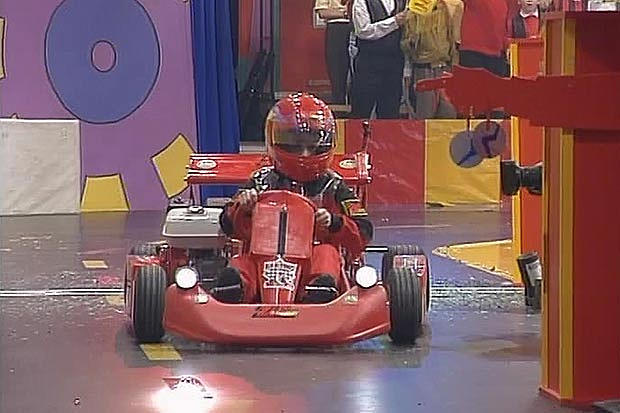
Susie Wolff began karting from an early age. Her she is aged eight. Photo copyright Susie Wolff.com .

She was both the Scottish Junior Intercontinental A and Junior Open Intercontinental A champion for 1997, before switching to the British Intercontinental A series for 1998. She finished 10th in the series, also finishing 11th overall in the European Intercontinental A series. For 1999 she moved up to the British Formula A series, finishing the year a respectable 13th. Whilst she struggled in the Formula A World Championship, finishing 34th, her progression and talent were clear to see.

2000 would be her final year in karting, whilst also managing to be her best year too. She improved to 10th in the British Formula A series, whilst also improving to 15th overall in the Formula A World Championship. Her achievements were recognized as she was awarded a prize for being the top female kart driver in the world.

From here on a progression to cars was inevitable, as she moved up to the competitive Formula Renault UK series, competing in the winter mini series initially. She joined the Motaworld team, although naturally her results were nothing groundbreaking as she acclimatized to the series.

For 2002 she made her debut in the full series, although with DFR racing she once again failed to post any notable results in a difficult season for her. 2003 would prove to be her breakthrough year, as she achieved her first podium in the series and finished the year 9th overall. She was nominated as a finalist for the prestigious BRDC McLaren/Autosport Young Driver of The Year Award, whilst also being recognized as the BRDC Rising Star of the year.

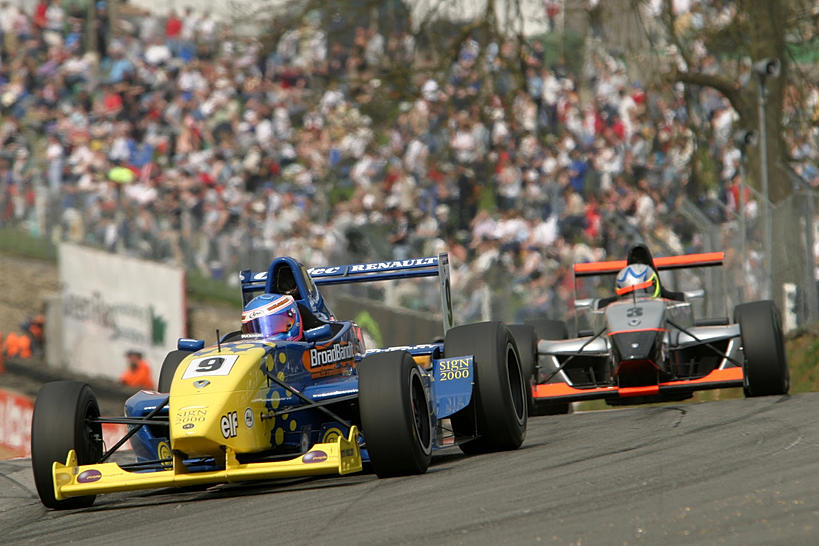
Wolff in action during her third and final Formula Renault UK campaign. Her she drives at Brands Hatch. Photo copyright Susie Wolff.com .

Stoddart returned to Formula Renault UK for her third year in 2004, joining the successful Comtec Racing team. She improved with three podiums during a year in which she finished 5th overall in the category. It was time to move up to British Formula Three for 2005, as she joined the established Alan Docking Racing team. Unfortunately for Stoddart her season was ruined by an ankle injury she suffered from the previous winter. She would only compete in the opening two round of the series. With her career momentum in the balance, her future looked precarious going into the 2006 season.

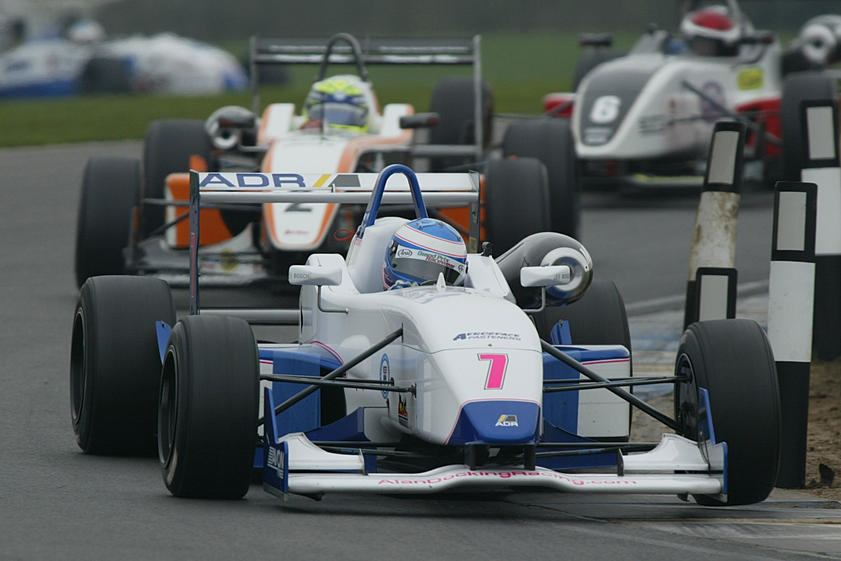
A rare shot of Susie in action during her injury plagued British F3 year in 2005. Photo copyright of SusieWolff.com .

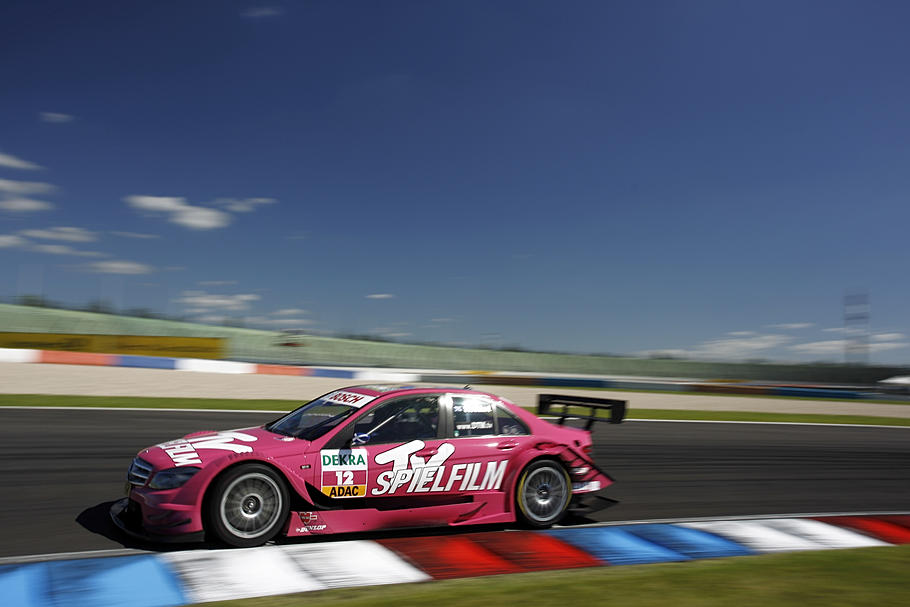
Salvation would arrive from an unusual source for Stoddart, as she was signed by the Mucke Motorsport team to compete in the German DTM touring car championship. It was always going to be tough for Stoddart to make an impact in the series considering she was a rookie, and was driving a two year old spec Mercedes also. She managed to show some form with a strong ninth in the final round at the Hockenheimring.

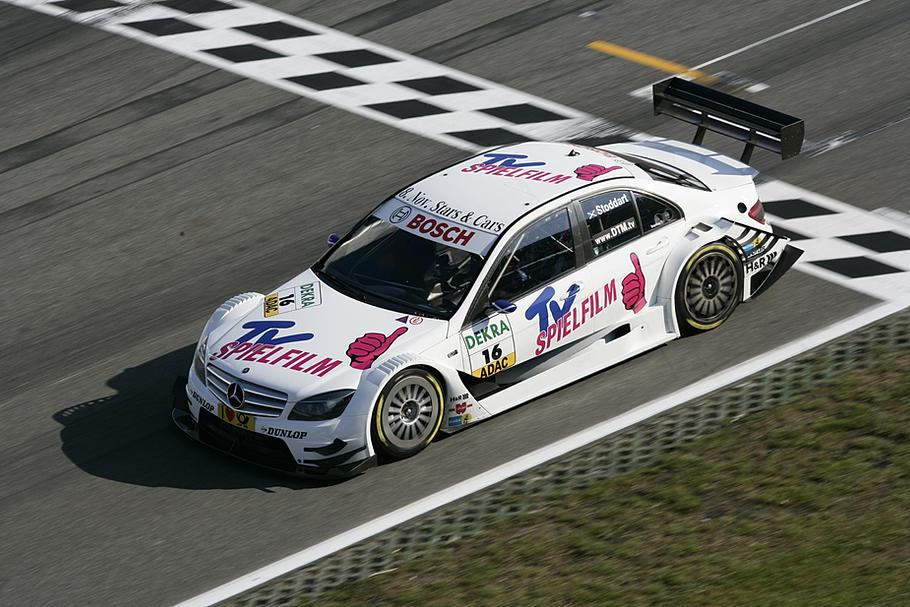
Stoddart in action during one of her seven years in the DTM touring car series. Photo credit thanks to SusieWolff.com .

2007 was much a repeat of 2006 as Stoddart stayed with Mucke in a two year old car, with her best result a tenth at Mugello halfway through the season. With little progress in her first two years, Stoddart moved across to the Persson Motorsport team for 2008, although despite having former champion Gary Paffett as a team mate her best result was again a tenth, this time at the Norisring.

Wolff remained with Persson in 2009, and amazingly her best result all year was once again a tenth overall at both the Norisring once again and Oschersleben. After four difficult years in the highly competitive category, Stoddart would make a breakthrough in 2010. Once again with Persson she scored her first points in the series, with two seventh place finishes at the Eurospeedway Lausitz and Hockenheimring circuits. At the end of the year she was 13th overall in the category with four points.

Stoddart standing out in one of her DTM seasons. Photo sourced from SusieWolff.com .

After this breakthrough year Stoddart was expecting to step up again in her sixth year driving in the DTM. Unfortunately for Stoddart it would prove to be another frustrating year as she struggled as she had done before. Her best result was 11th at Valencia, leaving her unclassified at the end of the year with no points.

2012 would prove to be the now Susie Wolff’s seventh and final year in the DTM series, although she failed to go out with a bang. She once again struggled in a series where a tenth can decide the top six. Her best result would prove to be two 12th places, although by now her priorities had somewhat changed.

In early April 2012 it was announced that Wolff had joined the Williams F1 team as a development driver for them. Whilst some within the motorsport community questioned the team’s motives considering her husband Toto Wolff was a shareholder in the team, she would prove to everyone that she was ready to handle a Formula One car.

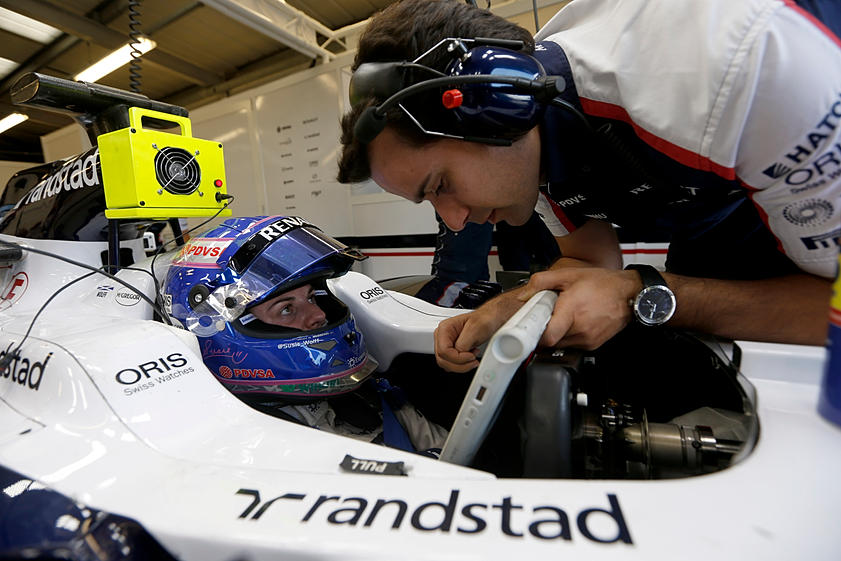
Wolff receiving instruction for her first F1 test with Williams in October 2012. Photo credit thanks to SusieWolff.com .

Wolff made her test debut for the Williams team at the Silverstone circuit in October 2012. She drove a 2011 Williams FW33-Cosworth and impressed the team with her driving. For 2013 attention increased on Wolff when she drove for the team at the mid-season young driver test. Her performance was scrutinized, as she finished the test 23rd overall from the combined times out of 33, although she was only a second off regular race driver Pastor Maldonado in the same car. It’s also very hard to read too much into testing times, considering they drove the car on different days.

It’s also worth considering that Wolff was not racing in 2013 at all, and besides her sole test run the previous October she had not driven a single seater since 2005. For Wolff her role within Williams stepped up in 2014, as it was announced she would compete in two practice sessions for the team across the year. This sparked a lot of media attention for both Wolff and the team.

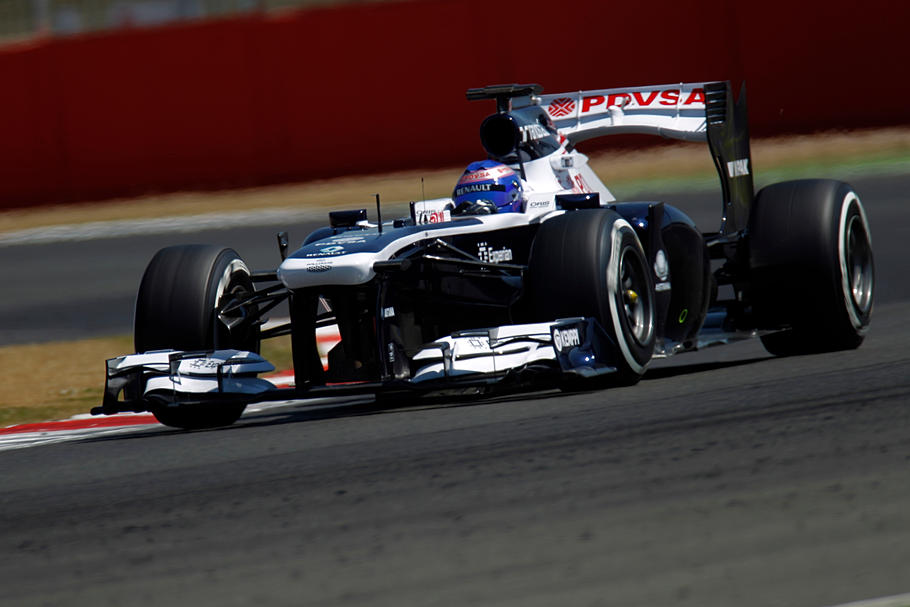
Wolff showing her talents in the 2013 F1 mid-season F1 test at Silverstone. Photo credit goes to SusieWolff.com .

At her home British Grand Prix Wolff duly made history, as she became the first female driver to compete in an F1 weekend since Giovanna Amati over two decades before in 1992. Unfortunately for Wolff she was not able to fully enjoy her day as an engine failure ended her session after only four laps. Things went much more smoothly in her second practice run for the German Grand Prix.

After overcoming a first lap gearbox issue, Wolff was able to complete a good number of laps as she ended the session 15th overall, only just over two tenths of a second behind team mate Felipe Massa. This was a very impressive result for Wolff considering her lack of experience compared to Massa, an 11 time race winner in the sport.

At the end of 2014 Wolff’s efforts were rewarded by the team, as she was announced as the team’s test driver for the upcoming 2015 season. Her role increased with the team as she completed a day with the team in the second pre-season test in Barcelona, before she once again completed the opening free practice session for the Spanish Grand Prix.

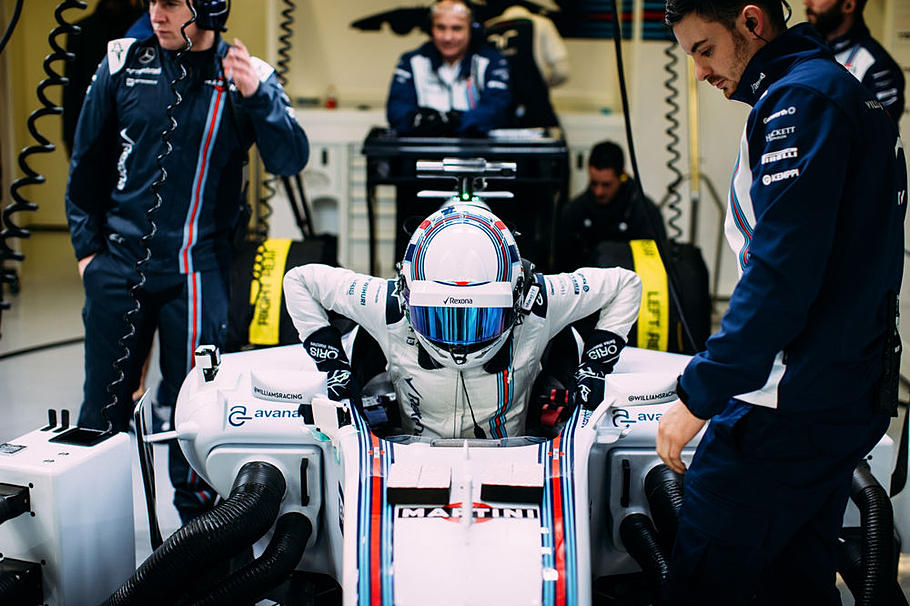
Wolff steps out after one of her many practice runs for the Williams team. Photo sourced from SusieWolff.com .

Wolff ended the session 14th this time,only 0.9 of a second behind regular driver Massa. This was once again a noteworthy performance once again considering their relative experience in F1. Wolff would only have to wait a few months for her next run in the competitive Williams FW37-Mercedes, as she drove the opening day of the in-season test at Austria. After 39 laps in a rain affected day she finished ninth overall with a 1m13.248 lap time.

Whilst this was not necessarily was Wolff was hoping for, she had a chance to redeem herself with another free practice run for the upcoming British Grand Prix. Once the session had been completed Wolff would find herself 13th on the timesheets, with a time only 0.8 of a second behind Felipe Massa. Unfortunately for Wolff this would be the last time she would drive for the Williams team, as she announced her retirement from the sport only a few days ago.

Wolff leads team mate Felipe Massa during free practice one for this year’s Spanish GP. Photo sourced from SusieWolff.com .

The news of her retirement at age 32 has garnered a lot of press attention, now seems like a perfect time to look towards the future and to what her legacy can be for a future generation of female racing drivers. Whilst the results in her career may suggest that she is not possibly worthy of this role, the very fact she was able to establish herself a genuine F1 affiliated driver irrespective of her gender shows what she has achieved in the last few years.

Whilst she initially was questioned based on her relative merit for a role within F1, by the time of her announcement yesterday she was a fully fledged Williams test driver. Along with other female drivers such as Danica Patrick in Nascar, Pippa Mann in Indycar, Katherine Legge in Sportscar’s and Simona De Silvestro in Indycar have all greatly raised awareness of female racing drivers and have showed that they can be successful irrespective of their gender.

This wave of increased awareness of female drivers needs to continue, if the sport is to full shake it’s current tag as a male dominated sport. The seeds of change have been planted with the likes of Leena Gade, Audi sportscar race engineer, have shown that women can be just as successful in all aspects of motorsport as men. Wolff has already said she wants to work with the grassroots elements of the sport to promote female participation in sport.

For the likes of Wolff she has a great opportunity now to interact and help develop a wider female generation of racing drivers, therefore Wolff can act as a great role model for any future wannabe racing drivers. They can look of the example from the likes of Wolff and aspire to match or even surpass their achievements in the sport. The future could turn out to be very bright for the next few female generations of racing drivers.

What are your thoughts on the career and potential legacy of the likes of Susie Wolff? Please feel free to give your comments below and thank you for reading.

The Long Journey To F1 For Alex Rossi Finally Paying Off

The Singapore Grand Prix was notable for many reasons. The brief end of the AMG Mercedes dominance of F1 2015. The impressively dominant victory for Sebastien Vettel and Ferrari. The brief invasion of the track by an F1 fan. It was not notable because it was the debut for Alex Rossi. Yet for everyone that knows or is a fan of his, this marked a huge milestone in the young American’s racing career. This also marked the culmination of the long road he has been subjected too to reach F1.

Alex Rossi started out like every other child with a burning passion for motorsport. In go-karting. After honing his craft over a number of years, Rossi began to garner interest in his talents after the American IKF Grand National Karting champion for the 100cc Yamaha class in 2015, age 14. He was also amazingly a top five finisher in the nationwide American Red Bull talent search, from over 2,000 of the best young American drivers hoping to be the next Phil Hill or Mario Andretti.

For 2006 Rossi stepped up to car racing with the renowned Skip Barber Racing School, earning a scholarship that he turned into third overall in the nationwide series, becoming the youngest winner in series history at age 14. He also managed to win the off-shoot Skip Barber Western Regional Championship.

Not content to hang around, Rossi moved on to the Formula BMW USA series, a young proving ground for the top North American single seater drivers dreaming of Formula One. His rookie year was a successful one with three wins and five podiums propelling him to a highly respectable third in the final drivers championship.

For 2008 Rossi remained in the series, joining the respected European outfit Eurointernational. What followed was a year of total dominance, as Rossi waltzed to the title with ten wins from fifteen races. He also showed his talents to the F1 paddock by winning one of the two races supporting the Canadian Grand Prix. Even better was to follow at the season ending support races for the Brazilian Grand Prix. Rossi took both pole positions, fastest laps and race victories that weekend. Utter Dominance is the only word to describe his performance that weekend.

Even better was to come later in the year, as Rossi won the end of year Formula BMW World finals at the Autodromo Hermanos Rodriguez in Mexico City. The end of year was created to be an end of year shootout amongst the best drivers from the various worldwide Formula BMW series. His prize for winning the race was a test with the BMW-Sauber F1 team alongside Formula BMW Europe champion Esteban Gutierrez.

Alex Rossi gets his first taste of F1 with a prize test for the BMW-Sauber team in December 2009. Photo copyright BMW.

For 2009 at age 18 Rossi made the bold but logical step of moving to Europe, choosing to join the British Hitech Racing in the Formula Master series.Neither a mid-season switch to the Czech ISR team or learning the European circuits or racing culture could deter Rossi from showing his skills. Three wins meant Rossi would finish the year fourth in the final drivers standings, and he was the highest placed rookie.

His year finished in the best possible fashion with his prize test for BMW-Sauber at the end of year young driver test at Jerez. The test ran in late November and Rossi was able to complete 82 laps across the day, even ending the morning session top of the times.

Enhancing his upward career progression was his step up to the GP2 Asia series for the winter of 2009/10. The series was an Asian based off-season series for drivers looking to compete in GP2 for the following year. Rossi stamped his authority with an impressive charge to fourth from thirteenth on the grid in his opening race. As change of teams for the second failed to derail him as he finished the mini-series ninth overall.

The only negative for the young American at this time was the folding of the ambitious new USF1 team. They were scheduled to join the F1 grid in 2010, and had contracted Rossi as their test and reserve driver. But with the team folding he was left to continue rising the single seater ranks, hoping to reach F1 a few years later.

Having established himself in Europe, Rossi moved to the newly inaugurated GP3 series for 2010. The series was created as a feeder category for GP2, itself the prominent feeder category to F1. Rossi joined the prestigious ART GP team, and acquitted himself well in the new category. He won on the opening weekend at Catalunya, and at the Hungaroring in front of the F1 paddocks. He would finish the year fourth in the standings.

For 2011 Rossi was moving again, this time stepping up to the Renault World Series, a category known for competing with GP2 as the premier F1 feeder category. He joined the prominent British Fortec team, preceding to shock the paddock with victory in his first ever race of the series in Aragon, Spain. A further win at Paul Richard and further four podiums left him third in the final standings. It’s also notable that he beat Daniel Ricciardo and current Porsche factory LMP1 driver Brendan Hartley this year.

Alex Rossi in action for Fortec at a wet Nurburgring circuit in Germany. Photo sourced from Wikipedia.

In March 2012 it appeared that Rossi’s impressive results were finally being recognized in F1. Rossi was announced as the Caterham test driver alongside Geido Van Der Garde. This link with the Caterham team also meant he joined the new Arden Caterham team for the 2012 Renault World Series season.

2012 would prove to be a hugely frustrating year for Rossi. He quickly went from pre-season title contender to also ran in the highly competitive Renault World Series, eventually finishing eleventh in the final points with his new team. His only bright spot that year was a third in the prestigious support race for the Monaco Grand Prix. His F1 chances were not seriously enhanced also, as he only drove the Caterham F1 car in one practice session for the Spanish Grand Prix all year.

2013 was promised to be a bounce back year for the 21 year old, as he moved across to GP2 with the new Caterham racing team. Missing the first round in Malaysia would prove to be an omen for the kind of season Rossi would have, as the team struggled to adjust to GP2. Rossi finished the year with one win in Abu Dhabi and three further podiums. These results went a little way to saving a season where he finished ninth in the final standings.

F1 was once again a luxury for Rossi, as he only drove the car in two practice sessions supporting both the Canadian and American Grand Prix’s. These drives seemed purely a publicity stunt for a beleaguered Caterham team, who suffered throughout 2013 at the hands of fellow minnow’s Marussia.

Rossi in action for the new Caterham GP2 team in 2013. It would prove to be a frustrating year for the American. Photo sourced from GP2fanatic.wordpress.com

For 2014 it seemed there was little on offer for Rossi other than remain with Caterham, although his early season form in GP2 was poor.  With only two points finishes from ten races Rossi was left out on a limb when it was announced in June that Caterham team principal Tony Fernandes was selling the team to a European-Middle East consortium. With only one practice session outing once again in Canada, Rossi chose to also leave the team and pursue his own opportunities for the rest of the year.

After spending several years linked with the Caterham team, his future looked uncertain going forward. Rossi was able to pick up a one-race deal with the Campos Racing team to remain in GP2 for the German Grand Prix weekend, with a best result of seventh showing potential. Unfortunately for the American this would prove to be his last outing of the year in GP2.

Salvation for Rossi was announced soon after from the Marussia team, who announced in late July he was to join the team as their reserve driver for the remainder of the season. Whilst this seemed a sideways move for Rossi, it was announced only a month later that Rossi would be making his long awaited Formula One debut at the Belgian Grand Prix in late August.

Rossi in action for Marussia during opening free practice for the Belgian GP. His F1 debut would be short lived. Copyright Marussia.

Only a month on from seemingly the end of his F1 ambitions and now he was set to make his debut for Marussia. Unfortunately, in typical unlucky fashion the contract dispute between Marussia and Max Chilton was swiftly resolved, keeping Rossi on the sidelines after taking part in free practice one. This was especially cruel for the American, who would have been ecstatic to make his F1 debut, yet it was ripped away from him on the Friday afternoon of the weekend.

From here Rossi sat on the sidelines until terrible circumstances seemed to give him another chance at his F1 debut. Lead Marussia driver Jules Bianchi was severely injured in an accident competing in the Japanese Grand Prix, and for the subsequent Russian Grand Prix Rossi was announced as his stand-in. Once again fate snatched his debut away from him after Marussia announced out of respect for Bianchi to only run one car in Russia.

His difficult year was completed when Marussia went into administration after the Russian Grand Prix, leaving Rossi out of a drive for the second time that year because of a team folding. This was a year where Rossi seemingly could do nothing right and his F1 chances looked very slim indeed.

Over the winter Rossi strongly considered switching his attention back to his homeland and switching to the Indycar series, where he would of had a strong chance of attaining a decent drive for 2015. After several very difficult years his stock in Europe was seriously depleted, however he decided to give Europe one last chance to show his talents and make inroads on an F1 drive.

He decided to return to GP2 for a third consecutive year, with the Spanish Racing Engineering team. Unsurprisingly he was not mentioned as a pre-season title contender, yet with a strong team behind him he began to show impressive consistency in the early portion of the season. A string of podiums culminated in his first win of the year in Belgium, and has since won two of the last four races in Monza and Sochi.

Rossi in action for Racing Engineering in a revitalizing 2015 season for him. Photo copyright of Motorsport.com

Whilst more favoured title contenders failed to impress, Rossi has proved himself the only man to take a challenge to big pre-season favourite Stoffel Vandoorne. He kept the McLaren junior driver honest right up until Vandoorne sealed the title in Sochi. Rossi can take consolation with a clear second in the points, but better was to come for the American.

With speculation mounting about the future of Manor driver Roberto Merhi, it was quickly announced on the eve of the Singapore Grand Prix that Alex Rossi would finally be making his F1 debut. This time there were not twists of fate, and aside from a free practice incident he impressed on his debut weekend.

His lost track time in free practice meant he qualified last, half a second off team mate Will Stevens. In the race it was a different story however as he passed Stevens and finished ahead of him in 14th on his debut. Whilst he may not have made headlines, he at least impressed the team with his drive.

Rossi once again qualified last on an emotional weekend for the resurrected Manor team, one year on from the terrible accident that eventually claimed the life of Jules Bianchi. Once again in the race Rossi overhauled Stevens to finish 18th in another solid outing for him. Merhi returned in Russia, leaving Rossi free to return for his home Grand Prix in America.

Alex Rossi in action for Manor during the Japanese GP weekend. He finished above his team mate once again. Photo copyright Motorsport.com .

Using the support of the crowd he out qualified Stevens for the first time, using this as a springboard to come home the last finisher in 12th come the race. With Stevens retiring mid-race he once again had beaten him in now every race. At the most recent Grand Prix in Mexico, Rossi was able to repeat his trick of out-qualifying and finishing in front of team mate Stevens. So far in four grand prix’s Rossi has out-qualified team mate Will Stevens twice and finished ahead of him in all four races.

Rossi has been slowly gathering interest from the F1 paddock with every passing weekend, as he has consistently showed he can impress in F1. Whilst he only has one more race in the car this year, Rossi is putting himself in with a great chance of retaining his Manor drive full time next year. With Manor receiving Mercedes engines and Williams gearboxes for next year, the team will be looking for a chance to move up the grid from their back marker status.

For Rossi, should he keep his Manor drive for next year, that would be an incredible exciting opportunity for the American to finally show his talents in a good F1 car. From a personal perspective I can’t think of another young driver more deserving of that opportunity than Rossi, who has been on the fringes of F1 for far too long when his talent should had merited him a place on the grid several years ago.

What are your thoughts on this article? Let me know in the comments box below and thank you for reading.

Robin Frijns: A Talent Missed By F1

October 11th 2015: The Formula One paddock is eagerly anticipating the second ever Russian Grand Prix. 24 year old Dutchman Robin Frijns is eagerly anticipating race day. But whereas Lewis Hamilton and Sergio Perez steal the headlines in Sochi, Frijns is racing hundreds of miles away from the F1 paddock at the Zandvoort track in his native Holland. Now, you may ask what is surprising about this seemingly innocuous fact.  A look at his junior single seater racing CV will tell all as to why this is a very strange occurrence indeed.

Frijns was a regular go-karter in both France and Belgium, finishing his final year of karting in 2008 coming third in the highly competitive KF2 European championship and second in the French KF2 series. Having shown his talent on the highest level of junior karting, logically the next step was a move into cars.

Before Max Verstappen blazed a trail last year by jumping straight from karting to the phenomenally difficult FIA European F3 championship, Frijns raised eyebrows in 2009 by making a similarly difficult step up to the Formula BMW Europe series. The series list of champions reads like a printout of the 2015 Formula One grid.

Despite being a rookie Frijns made his mark on the series, finishing the year third in the points with one win and five further podiums. At age 18 Frijns had marked himself out as a young driver to watch in the motorsport universe. 2010 saw Frijns return to the series with the same Josef Kaufmann Racing team that propelled him to third the year before.

Frijns was considered the pre-season title favourite, but he found himself in a close title battle all year with British driver Jack Harvey. Six wins and a penultimate race retirement for Harvey meant Frijns was crowned the 2010 Formula BMW Europe series champion by a scant margin of 11 points.

Frijns tops the podium at the Hungaroring round of his victorious 2010 Formula BMW Europe campaign. Photo credit is unknown.


Having taken the title in front of the Formula One paddock, Frijns was moving up to the next rung of the single seater ladder. Frijns had shown further proof of his talent with a guest appearance in the equally competitive Formula Renault 2.0 category. In a one-off outing for Kaufmann in the offshoot Northern European Cup series at Spa, Frijns made up for his lack of experience by claiming a second,fifth and a win in the three races.

It was time for Frijns to move into the Formula Renault category full time in 2011, sticking with Josef Kaufmann racing to compete in the super competitive Formula Renault Eurocup.  As a rookie Frijns once again left the motorsport community drooling, claiming the title in his first year with five wins and four other podiums. It’s notable that he beat current F1 drivers Carlos Sainz Jr, Daniil Kvyat and Will Stevens along with the F1 bound Stoffel Vandoorne to win the title, with all of them being Eurocup rookie’s.

With Renault providing significant support through a scholarship scheme it was a obvious Frijns would be stepping up to the Renault World Series for 2012. With 3.5 litre engines and tons of downforce the series is seen as a rival of the GP2 series, the predominant F1 feeder series.

The established Fortec motorsport team were the one’s to sign Frijns, with a top five in the championship the target for the talented rookie. Whilst the Eurocup title success had been a surprise, winning the Renault World Series title as a rookie shocked the single seater community. A third and a win on his debut weekend was a statement of intent, something he followed up with two further wins and four podiums.

The final round at the Circuit de Catalunya was a three way title showdown between Frijns and the more experienced duo of Jules Bianchi and Sam Bird. His two rivals were both vastly more experienced and were closely affiliated with F1 teams. With the title coming down to the final race of the season, fireworks were predicted.

Late on, the race exploded into life. On lap 21 Bianchi found his way past Frijns at the first portion of the lap, with Kevin Magnussen close behind. Several corners later Magnussen attempted to also pass Frijns, who moved to block him passing. This quick change of direction left him nowhere to go as it then appeared he pushed title rival Bianchi into the gravel trap as he attempted to stay on the track.

Frijns celebrating with his Fortec team after a contentious final round incident sealed the Renault World Series title for him. F1 beckoned. Photo sourced from automobilsport.com .


This highly contentious collision led to a 25 second time penalty for Frijns, dropping him out of the points. In the end this penalty had no effect as Frijns was still able to claim the title over a disappointed Bird and furious Bianchi. Allegations were made by Bianchi post-race that Frijns deliberately made contact with Bianchi to push him off the track, allegations were were not investigated and furiously denied by Frijns himself.

Despite the contentious nature of the victory, it was nevertheless a huge achievement for Frijns to win the Renault World Series title in his first season. This title win propelled Frijns into Formula One community. After a stellar junior racing career with little financial support, it at last appeared that Frijns was destined for F1.

Frijns took part in the post-season F1 young driver test for the small Swiss Sauber team in Abu Dhabi, impressing enough on his day in the car to be announced at the team’s reserve driver soon after. Whilst it was not a race drive, it was a way to impress the F1 paddock with his time in the car throughout 2013.

Frijns driving the title winning Red Bull RB9-Renault at the post-season young driver test in Abu Dhabi. The test is a prize for winning the Renault World Series. Photo credit thanks to Motorsport.com


Both Frijns and Sauber were keen for him to continue racing in 2013, but with little financial support it was tough for him to progress into GP2. Impressive pre-season tests for the Trident and new Russian Time team showed Frijns deserved to be on the grid, but a lack of funding kept him off it for the opening round in Malaysia.

For the second weekend of the season in Bahrain it was announced that Frijns would join the new Hilmer Motorsport team for a number of rounds. He qualified a respectable 10th on his debut, but an accident and his struggles adapting to the Pirelli tyres prevented him from attaining a good result.

With a race by race shoestring budget Frijns was confirmed for the next round in Spain, and he showed his talent by claiming the feature race victory, cementing his status with a second in the shorter sprint race on Sunday morning. With the weekend supporting the Spanish Grand Prix, Frijns had once again shown the F1 paddock his talents as a driver.

Frijns on his way to his only GP2 win of 2013 for the new Hilmer Motorsport team at Catalunya. Photo sourced from Formule1.nl .


Alas, budget concerns and the lack of experience from the new team hindered Frijns for the rest of the season. He was only able to produce two more points scoring finishes as he completed only six of the eleven rounds in the championship.

2013 can be seen as the year his career momentum stalled, with a part GP2 season not offering much and his opportunities at Sauber were severely limited thanks to their grave financial concerns. He was not in the car much and at the end of the season was dropped because of his lack of funds he could bring to the team.

Despite his turbulent 2013 season Frijns was allowed a glimmer of hope going into 2014. His F1 career was rescued thanks to the back marker Caterham team, who appointed him their reserve driver. Whilst it must of been frustrating to have Swede Marcus Ericsson ahead of him in a race drive, considering he’d beaten him on occasion in GP2 the year despite his lack of budget, he could at least say he remained in F1.

One of the rare occasions Frijns was behind the wheel of a Sauber in 2013. Here he is at the mid-season young driver test at Silverstone. Photo sourced from Worldcarfans.com .

Sadly for Frijns his bad luck from Sauber followed him to Caterham, as he only drove in two practice sessions for the team. He drove in Bahrain and Britain, yet the team were taken over mid-season with chronic financial issues. This left Frijns washed up and seemingly out of F1 for good now.

Whilst the future in single seaters looked bleak for Frijns at the ripe old age of 23, his talent would take him in a different direction. He was handed a lifeline by the Belgian WRT GT racing team, who offered him a test at the end of 2014. His impressive showing was enough for WRT team principal Vincent Vosse, a former GT driver, to offer him a drive with his Audi works supported team.

Partnering fellow single seater convert Laurens Vanthoor for the Blancpain Sprint Series and Jean Karl Vernay supporting them in the Blancpain Endurance Series, he was for the first time in his career a professional racing driver. After a small hiccup at the opening round of the Sprint series, Frijns took to GT racing and his Audi R8 LMS like a duck to water.

An even rarer occurrence. Frijns behind the wheel of a Caterham in 2014. Here he is in Bahrain free practice. Photo sourced from F1fanatic.co.uk . Copyright Caterham and F1.

Ably led by Audi GT superstar Vanthoor, Frijns was able to secure the combined Blancpain GT series title at Zandvoort last Sunday, despite missing Vanthoor thanks to an injury several weeks ago which prevented him from claiming the title with Frijns.

Now is where we go full circle, as I mentioned at the start of the article. Whilst Frijns was claiming the Blancpain GT title last Sunday, his talents should have propelled him to a place on the Russian Grand Prix grid last Sunday. Thanks to extreme bad luck and a lack of funding it hasn’t happened for Frijns in F1 yet. For now his story joins a long list of very talented young drivers who should reach F1, but don’t for whatever reason.

For now Frijns must be content with a growing reputation in GT racing with WRT and Audi, along with a recently announced drive for Andretti Autosport for the second season of the Formula E championship. This new electric series is growing and could offer Frijns a chance to showcase his talents to the single seater community. One thing is for sure though. Motorsport fans will hear a lot more about Robin Frijns for the duration of his career.

Frijns on his way to the Blancpain GT series title last weekend at Zandvoort to complete a great first season in GT racing. Sourced from RaceXpress.nl copyright Miguel Bosch .

What are your thoughts on this article? Please feel free to comment below and thank you for reading.

End Of An Era For Marcel Kittel And Giant-Alpecin

Last Friday the end of one of the most successful recent partnerships was formally announced, as Team Giant-Alpecin and Marcel Kittel announced they would split at the end of this season. For four years both supported and helped each other grow from unknown’s to contenders in all three grand tours. Now this morning it was announced Kittel will instead join the Belgian team Etixx-Quickstep, but what is the legacy being left behind from this split?

Who could have predicted when the young German U23 time trial champion Marcel Kittel joined the small Skil-Shimano in 2011, that within three years they will have won 11 stages in grand tours, including eight in the Tour de France. During his junior career Kittel excelled in the time trial, yet once he moved up to the professional ranks he blossomed into the fastest sprinter in the peloton.

Wins in smaller development races such as the Four Days of Dunkirk showed his talent, however his ultimate potential was not known. That was until Stage 7 of the 2011 Vuelta a Espana. One of cycling’s three major grand tours, it’s a race known for it’s extreme difficulty. Yet Kittel was able to out sprint notable rivals Peter Sagan and Oscar Freire to claim the stage win in his very first grand tour.Now it was clear to the cycling world that Kittel was a man to watch in the coming years.

The upward trend continued into 2012, with a flurry of victories which led up to his and the team’s debut at the 2012 Tour de France. Kittel would spearhead the team as he looked for stage wins and the green points jersey. Sadly, this dream would turn into a nightmare as he failed to win a stage before being forced to abandon the race early in stage five thanks to a viral infection.

Whilst 2012 was a relative disappointment for Kittel and Skil-Shimano, 2013 would be the coming out party for both. With a change of name to Argos-Shimano and a step up to the premier WorldTour of cycling, the pressure was on to prove their worth. Winning stages of warm up races such as Paris-Nice and the Tour of Oman showed that he and the team would be firing on all cylinder’s come July and the Tour de France.

With an expert sprint train comprising team mates John Degenkolb, a very quick sprinter himself, Tom Veelers and Tom Dumoulin to name a few, Kittel was put in the perfect position to win the first stage going into Corsica. A bizarre incident with the Orica-GreenEdge team bus and the finish line banner created confusion, however in the end Kittel out sprinted rival Alexander Kristoff to claim a momentous maiden Tour de France stage win for both Kittel and the Dutch Argos-Shimano team.

The team’s joy is captured brilliantly in the riveting documentary on the team, Clean Spirit, which is well worth a watch. The win also signaled Kittel’s first leaders yellow jersey. This prestigious honor is usually the domain of general classification riders, yet Kittel was able to steal it early on.

Kittel celebrates his yellow jersey at the 2013 Tour de France. Photo credit thanks to Getty Images.

Kittel would go on to completely dominate the sprinting stages of the Tour, effortlessly showing up noted sprint supremo Mark Cavendish to record stage victories on stages 10,12 and 21. His last stage win on the Champs-Elysees was the realizing of a dream come true for the young German, who broke Mark Cavendish’s four year streak of stage wins on the Champs-Elysees.

Victory in the world’s most famous sprint stage completed a fairy tale Tour de France for Marcel Kittel and his Argos-Shimano team. The success in their first year at the world tour level and second Tour de France was staggering, with the joy of their incredible Tour being captured in the film Clean Spirit. The film is well worth a watch for anyone interested in cycling.

With the majority of the team being retained for 2014, and a healthy new sponsor in bike manufacturer Giant, the only question was if Kittel and the team could repeat their feats of a year before? This question would be answered only a few months into the season.

Victories in several early season races were cemented with two stage wins early on in the 2014 Giro D’Italia. The season’s first grand tour saw Kittel dominate the early sprints, before abandoning the race at the end of stage three to fully concentrate on the Tour de France. With a similar team of talented domestiques supporting him, much pre-race attention was focused on the impending battle between the likes of Mark Cavendish, Alexander Kristoff, Peter Sagan and Kittel for the sprint honors.

Mark Cavendish suffered the worst possible start and was forced out of the Tour before stage one even finished, a crash in the bunch sprint leaving him with a seperated right shoulder and broken dreams of Tour de France success. Kittel went on to win the opening stage and claim the first yellow jersey for the second consecutive year.

Whilst he lost the leaders jersey on the next stage, Kittel could console himself with wins on stages three and four. A long struggle ensured over the next two weeks as Kittel used all the support of his team to haul himself up the iconic French mountains, steeling himself for the final stage and the sprint on the famous Champs-Elysees. Unofficially known as the world championship for sprinter’s, Kittel was intent on repeating his landmark victory from a year before.

Both of Kittel’s victories on the Champs-Elysees were almost identical, both times narrowly defeating Alexander Kristoff at the line. Finishing off the year with two stage victories in the Tour of Britain cemented Kittel’s most successful year yet in cycling. His star was rising, the question what heights could he reach in his career?

Kittel celebrating his Champs-Elysees victory in 2014. Photo sourced from cyclingweekly.co.uk .

Whilst the past two years were a dream for Marcel Kittel, 2015 was a reminder that real life isn’t a fantasy but sometimes a nightmare. A race win in January indicated this year would be another successful one, however a virus destroyed the rest of his season.

Initially he was set to make several comeback’s in the months leading up to the Tour de France, but when these were postponed his Giant-Alpecin team were forced to admit defeat on the matter. Kittel was not selected for the Tour de France team, instead forced to watch his team mates at home as he still recovered from his virus.

The rest of the year proved difficult for Kittel, although he did manage to win the opening stage of the Tour of Poland. Whilst Kittel slowly returned to the peloton in the later months of the season, a shift amongst his Giant-Alpecin team was brewing.

His team mate, close friend and fellow sprinter John Degenkolb demonstrated his talents early in the year, taking on some of Kittel’s success as he won both Milan-San Remo and Paris-Roubaix. Both make up a group of cycling’s classics, and are highly prestigious races to win.

Following on from this the team also achieved some success at the Tour de France, despite missing Kittel, as German mountain domestique Simon Geschke won stage 17, and Degenkolb challenged for several sprint finishes. The real shift for the team occurred during the Vuelta a Espana. The young Dutchman Tom Dumoulin emerged from the shadows of his domestique support duty to win two stages and seriously challenge for the overall win.

Tom Dumoulin celebrating with the leaders red jersey in this year’s Vuelta a Espana. Photo sourced from cyclingweekly.co.uk .

This general classification ride from Dumoulin showed his incredible talent and shocked the cycling community, as he stated his claim for the future. The effect of this on the Giant-Alpecin team has been significant, as it now appears the team have switched their mentality from that of a sprinters team to a general classification team.

Tom Dumoulin will likely now lead the team in the GC, whilst John Degenkolb will assume the sprinters duties vacated by Kittel. After some talks with the team, the breakdown of their relationship was established as Kittel was granted a release from his contract a year early.

This has left him free to sign for the Etixx-QuickStep team, where he will hope to return to his top form next year. The Belgian team are primarily a sprinters team, therefore Kittel will receive the maximum support from established riders such as great friend Tony Martin.

Unfortunately, it simply seems that whilst both Marcel Kittel and the Giant-Alpecin team achieved a lot of success, once both were established on the world tour, they were destined to move apart in their future goals. For their fans they will now have the memories of the two year period where both Marcel Kittel and the Giant-Alpecin team rocked the cycling establishment.

Jenson Button and Romain Grosjean Hold Key to F1 Driver Market

So far, the 2015 F1 driver merry-go round has been largely a non-affair. It seems as if the moment speculation mounts over a driver potentially moving teams, they are swiftly re-signed by their current one’s.

Kimi Raikkonen was the man on everyone’s lips during the Summer break, although Ferrari exercised their option to keep him during the Belgian GP weekend. The man expected to replace him, Valtteri Bottas, was subsequently re-signed by Williams as they retained their current line up of Bottas and the experienced Felipe Massa.

The ripple effect caused by Raikkonen being retained has trickled down the grid, with the highly touted German Nico Hulkenberg shunning a potential move to the new Haas F1 team to re-sign with Sahara-Force India. Whilst the very close links Haas has with Ferrari was a huge potential plus, the re-signing of Raikkonen has left him little option but to re-sign with his current team, much like Bottas.

Hulkenberg in action for Sahara-Force India earlier this season. Photo credit goes to Autosport.com and latphoto.co.uk .

Now with a lot of potential moves on ice at least for another year, the attention is now focused on two drivers at very different stages of their career’s. The man sparking most of the F1 headlines this week is the experienced and popular Brit Jenson Button. Whilst he has an contract in place with McLaren for next season, it appears increasingly likely the 35 year old will prematurely end his stand out career.

Rumors are growing this week that Button will announce his retirement from the sport at this weekend’s Japanese Grand Prix. Button commented this week, stating that he had already made a decision regarding whether he will continue in F1 next year. He stated “it’s always nice to make an announcement when you are at your home grand prix”.

He later added “There are a lot of meeting’s in Japan, Ron Dennis and Eric Boullier will be there. I’m sure there will be a lot of meeting’s at the headquarters.” Rather more ominously Button has also been giving cryptic suggestions as to his lack of desire to remain in his current position. He said “The joy of being in the car is only there if you’re fighting at the front, because you feel like you’re achieving something, if you’re fighting near the back, you’re driving and F1 car, but you can easily get joy driving something else.”

Button leaping the kerbs in a character building year for the new McLaren-Honda partnership. Photo credit courtesy of SkySportsF1.com .

These comments suggest Button has began to feel fed up with the hugely trying season both he and team mate Fernando Alonso have enjoyed with the new McLaren-Honda package. Should Jenson Button retire from the sport at the end of the season, McLaren have a big decision on their hands as to who they will choose to replace him. They have two very quick young development drivers in Kevin Magnussen and Stoffel Vandoorne.

Magnussen partnered Button last year and showed promise, along with the typical rookie mistakes also. This year he has been the team’s reserve driver, though the Dane has recently stated he can’t do another year without racing. Magnussen has been linked with the Haas team for next year, although that seems increasingly unlikely. Stoffel Vandoorne is rapidly stating his claim as the most dominant GP2 champion since Nico Hulkenberg in 2009. He is ready for F1 yet he may struggle to find a seat available unless he’s promoted by McLaren.

Stoffel Vandoorne in his customary position, leading at the front. Photo credit thanks to Motorsport.com .

The other key driver to this year’s market appears to be Romain Grosjean. The Frenchman is reaching the peak period in his F1 career at age 29, and has spent his entire career with the current Lotus team. Whilst he’s comfortable with the midfield team, it appears the team’s ongoing financial issues may be the final straw.

Grosjean is eager to show he is a better version of the driver that regularly put the dominant Sebastien Vettel under pressure in the second half of the 2013 season. Since then the Lotus team have struggled mightily, and it appears Grosjean has had enough. Despite the carrot of the team’s seemingly imminent takeover by Renault, this may not be enough to keep Grosjean.

Whilst the move to Haas may seem a backwards one considering their a new team and will likely struggle next year, the long term incentives may prove enough to tempt Grosjean. The team’s close links with Ferrari will put him in a great position to replace Kimi Raikkonen when the Finn leaves the team in the next few years.

Romain Grosjean driving for Lotus earlier this year. Photo credit goes to Autosport.com and latphoto.co.uk .

This is where the move makes sense, as it’s likely he will stagnate at Lotus or Renault potentially, although things may well improve should Renault complete their takeover of their team. For Grosjean this is a huge decision he will make, as it affect his potentially whole F1 career as legacy. Should he make the right decision he will likely end up in a race winning car, however should he make the wrong decision and he may regret it for the rest of his F1 career.

Speculation Builds Around Jenson Button Again

For Jenson Button this recent speculation over his future with McLaren for next season must feel like a really bad case of deja vu. This time last year he faced the same mounting speculation over his future, which was not settled until early December. This time around he will be pleading with the McLaren team to make a decision as to his future a lot quicker than last year.

It seemed very much in the balance last winter as the McLaren team exhaustively deliberated who would be the best choice to partner the incoming superstar Fernando Alonso. With the new Honda engine package for this year, it was decided that the vast experience and great relationship Button has with Honda swung the drive in his favour. This forced promising rookie Kevin Magnussen into the reserve driver role for this year, however with Belgian protege Stoffel Vandoorne blitzing the GP2 field McLaren now has a serious driver logjam on it’s hands.

Whilst the team has the most high profile driver line up in F1 outside of AMG Mercedes and Ferrari, the McLaren pairing of Fernando Alonso and Jenson Button will not be a cheap option for the team. This is becoming increasingly important as McLaren has struggled to return to race winning form since the end of 2012. McLaren team principal Eric Boullier commenting recently how the team’s struggles this year will hugely affect their future revenue streams.

The team are currently ninth in the F1 constructors standings, which will represent a drop of $15 million dollars compared to their fifth place finish last year. Their lack of results will also make it a lot harder to attract potential sponsors. This is something the team has struggled with since it lost title sponsor Vodafone at the end of 2013.

The McLaren-Honda car for this year, noticeably devoid of major sponsors once again. Photo credit thanks to McLaren.com and BBCsport.com .

Jenson Button reiterated his commitment to F1 last season when he took a pay cut to re-sign with the team for 2015 and 2016. Therefore it seems strange that speculation is still mounting recently as to his future when he has a contract in place for next year. Also Button will be kept up to date with any negotiations with Vandoorne as he co-manages the young Belgian driver.

With Fernando Alonso still the best overall driver in F1 McLaren are not going to drop him any time soon, this leaves Button on the hot seat should McLaren feel they need an injection of youth in their driver line up. Whilst this may prove to be an illogical move at this present time with Honda’s inexperience with these new, highly complex power units. Surely Honda will need the vast experience of both Alonso and Button to help in their mission to catch up on the likes of Mercedes and Ferrari who have several years head start on them in terms of these power units.

If Button is retained for next year this leaves McLaren with another issue. What can they do with Magnussen and Vandoorne? Magnussen showed good promise in his rookie year last year, and has a stellar junior single seater record. Magnussen has already stated earlier this year he cannot do another year of not racing and sitting on the sidelines. This will likely force McLaren to try and find him a drive with another F1 team, which will prove very difficult.

The team faces the same issue with the GP2 champion elect Stoffel Vandoorne. He has impressed in every junior racing category so far, and has exceeded McLaren’s expectations for him to win the title this year. He’s dominated the field with consistent podium placings, and he currently sitting a whopping 108 points ahead of fellow F1 hopeful Alex Rossi in 2nd. Surely Vandoorne will be in F1 next year, it’s simply a case of which team he will be driving for.

Stoffel Vandoorne in action in a dominant GP2 year for the champion elect. Thanks to Motorsport.com for the high quality photo.

For McLaren they face a very tough decision over the coming months, as they have four legitimate F1 drivers yet only two seats to house them. With Fernando Alonso a cert for next year they now must decide if they are to honour Jenson Button’s contract for next year and retain his vast experience and speed. Or will they instead go with the young contender who appears destined for F1 in Stoffel Vandoorne. Kevin Magnussen is also waiting in the wings, although for McLaren, two of their drivers are likely to be disappointed by the time the new F1 season is rolling around next year.

Who should McLaren retain? Give your thoughts in the comment box below.

Dominant Chris Froome Win Sign Of Things To Come?

On Sunday evening Britain’s Chris Froome came across the finishing line on the Champs-Elysee’s to confirm his dominant Tour de France victory, his second overall. He held the leaders yellow jersey for the majority of the three week tour, and with the best team supporting him could this victory be repeated in the next few years?

Whilst of course Froome and his fellow Team Sky colleagues will insist that winning the biggest bike race in the world was anything but easy. Of course it was anything but easy, with a team that looked to be in control of the race throughout the majority of it’s three week running. Whilst the Spanish Movistar team and it’s two pronged attack of the peloton’s best climber Nairo Quintana and the experienced Spaniard Alejandro Valverde troubled Froome in the final few days, he always had just enough to retain his race lead.

Chris Froome celebrates his second overall victory in the Tour de France on the podium last Sunday. Picture credit goes to Sirotti.

The penultimate stage’s heroics from Quintana as he surged up the famous Alpe D’Huez mountain climb and took 1 minute 26 seconds out of Chris Froome’s lead, he was able to ride into Paris with a winning margin of 1 minute 12 seconds in hand. Plenty of experts and fans have spent this week stating where Froome won this year’s Tour. The popular consensus is that he won the race on Stage 2 into Zeeland, where Froome used crosswinds to his advantage to take 1 minute 28 seconds out of Quintana. The other popular answer for where he claimed his victory is his dominant stage victory on Stage 10 going into La Pierre-Saint-Martin, the first climbing stage of the tour. He attacked late on and claimed a further 1 minute 4 seconds over Quintana in just over 6km of climbing.

Froome’s Team Sky have constantly spoke since the team’s inception in 2010 about the importance of marginal gains, which has meant the team is now widely known in professional cycling for being the major innovators of the WorldTour peloton. This intense focus on every detail of professional bike racing, no matter how small, has helped the team now win three Tour de France titles in four years.

Famous examples of their innovation this year alone are new suspension designed to help firstly Bradley Wiggins in the Spring classic Paris-Roubaix, and Froome with the infamous cobbled stages that were the danger point in the first week of this years tour. Another example is the teams decision to bring a large motorhome for team leader Richie Porte in this years Giro D’Italia. It gained a lot of press attention, although the UCI have now insisted riders stick to the tradition of staying with their team in designated hotels throughout long stage races.

Of his current rivals it appears the young Colombian Nairo Quintana is his strongest rival in the coming years. Quintana is only 25 years old and has already amassed an impressive palmares in Grand Tour races, with two 2nd places in his two Tour de France races, and an overall victory in the Giro D’Italia last year. His climbing ability in unmatched in the current peloton, therefore this years Tour de France presented a perfect opportunity for him. The layout favoured specialist climbers, with a lack of time trials or flat stages that he struggles with in comparison with his rivals.

Quintana after the race remarked that he felt he possibly lost the Tour de France in the opening week of flat stages, and the strategic errors his Movistar team made in the opening week will need to be rectified if Quintana is to seriously challenge for the Tour de France in the future. On the other hand, his innate climbing ability and the strength of his team mean he will never be discounted in future Tours.

The talk before the race was of four major victory contenders battling it out for overall victory this year, although in reality it came down to a straight fight between Froome and Quintana. The other two contenders, Alberto Contador and Vincenzo Nibali, looked out of sorts during the race. For Alberto Contador this will have been because of the supreme effort he had already put himself through earlier this year as he attempted to complete a double victory in the Giro D’Italia and Tour de France in the same year.

Whilst Contador dominated the Giro in May, the effort that he put into that hard fought victory meant he looked weakened throughout the tour, although put in remarkable efforts to remain in contention, he eventually finished 5th overall and 9 minutes 48 seconds down on victor Chris Froome. Contador finished his season with the Tour de France, and will now likely fully focus on preparation for the Tour de France next year, as he looks for one last tour victory in the last years of the remarkable Spaniard’s career at his current age of 32.

Alberto Contador celebrating his Giro D’Italia victory in May. Photo sourced from CNN.com

For Vincenzo Nibali, his lackluster tour form was more puzzling, as the defending champion competed in very few races prior to the tour, with his only success being in the Italian national road race championships in late June. Therefore he should have been fresh and raring to go over the tour, although from early on he looked out of sorts. His form raised the ire of his Astana team boss Alexandre Vinokourov. At one point in the opening week the team looked to have switched it’s focus to team mate Jakob Fulsang, before Nibali raised his game in the second and third weeks of the race.

He even showed a glimpse of the form that led him to dominate last years tour, with a brilliant solo breakaway towards the end of the stage 19 in the mountains, taking the stage victory and 1 minute 14 seconds out of Froome. His strong third week meant he eventually recovered to finish 4th overall, 8 minutes 36 seconds behind Froome. Nibali announced this week he will ride the Vuelta de Espana later month, as he looks for victory in the final Grand Tour of the year.

Next years Tour de France will now be crucial for Nibali, as it will be the litmus test that determines whether he deserves to be seen as one of the great Tour de France riders, or whether his dominant victory in 2014 was a perfect result for him thanks to the eliminations of Alberto Contador and Chris Froome and the no-show of Nairo Quintana. He has little left to prove in cycling having won all three Grand Tours, although his legacy may be slightly tainted if he fails to reach the heights of his tour win last year.

Some Chris Froome detractors may point to the fact that with the effective cycling transfer window opening today, that some of Froome’s loyal lieutenants may seek pastures new as they looks to establish their own Grand Tour credentials. Key domestique this year and good friend Richie Porte has today had his long awaited move to Team BMC confirmed. Whilst losing the talented Australian is a big blow for Froome and Team Sky, another key domestique for him this year in Dutchman Wout Poels looks to be a more than adequate replacement for Porte within Team Sky.

Another key domestique for Chris Froome this year was the Welshman Geraint Thomas, who for a long time was within the top five of the overall standings, before losing 10 minutes on the leaders on stage 19. His eventual 15th overall however is still a best for him at the Tour de France, and in an interview afterwards stated he has thought about becoming a Grand Tour contender in the future. Whether this will be with Team Sky for the Giro of Vuelta or whether he will be forced to leave the team to achieve this should he want to is currently unknown.

Although Team Sky will lose some riders this year, the transfer window also means they can re-stock or even improve their roster for next year. Two high profile names consistently linked with Team Sky are current world road race champion Michael Kwiatkowski and the Spaniard Mikel Landa. Both are out of contract with their current teams, Etixx-QuickStep and Astana respectively, and both are strongly rumored to have already signed deals with Team Sky. Both are hugely talented riders, with Kwiatkowski a key man for Etixx this year and Landa showing his class with a strong third overall in this years Giro D’Italia.

Both Landa and Kwiatkowski would be huge signings for Team Sky, and would mean the team would go into the 2016 season with an even stronger Grand Tour roster than this year, which is a formidable thought for their rivals. Other riders have been linked with Sky, including the likes of strong Movistar climbers Benat Intxausti and the Izagirre brothers Gorka and Ion will join the team next year. Intxausti would be a likely key mountain domestique for Froome should he join the team, whilst the Izagirre brother would be key domestiques on the flat stages for Team Sky.

In overall terms, Team Sky showed this year they had the strongest overall team in the race, as they looked the dominant team throughout all stages of the Tour de France, backed up by Froome’s dominance in the yellow jersey from stage 7 until the final 21 in Paris last Sunday. The teams potential was realised this year, and if any of the rumors of riders joining the team prove to be true, the team would be even stronger at next years Tour de France.

For Froome’s rivals Quintana, Contador and Nibali and their Movistar, Tinkoff-Saxo and Astana teams respectively, this should have them very worried about the strength of Froome and Team Sky. With the off bike distractions around doping allegations and a small minority of fans shameful actions towards Froome not likely to be repeated next year, his rivals will have to come to the tour in peak condition, or for a strategic error or other ailment to halt what will likely be a very tough to beat Chris Froome and Team Sky.

What are your thoughts on this article? Please feel free to comment below and give your opinions. Hope you enjoyed it!

Spa 24 Hours Set To Be A Classic

This weekend the sportscar world will once again focus on the annual Spa 24 Hours, which in recent years has become the home of GT3 racing as the category has breathed new life into this classic sportscar endurance race. The entry list excels in both quantity and quality, with 58 cars on the current entry list, all filled with the finest GT works supported drivers in the world.

GT3 racing has provided brilliantly competitive racing since it’s inception in 2006, and this years Spa 24 Hours will likely be a highly competitive sprint race for 24 hours. Last years winners Laurens Vanthoor, Rene Rast and Markus Winkelhock return this year with their new 2015 spec Audi R8 LMS run by the works supported Team WRT. Team WRT and fellow Audi R8 LMS works supported Team Phoenix will provide stern opposition to the rest of the field, although GT3 racing in 2015 boasts a bevy of manufacters and works drivers aiming to topple Audi this year.

Not that Audi have not fully prepared to defend their Spa victory from last year, with a further four works supported Pro cup class entries, with the likes of Robin Frijns, Stephane Ortelli, Andre Lotterer and Mike Rockenfeller joining high quality driver line up’s across all six works supported entries.

Bentley and Lamborghini are the new kids on the GT3 block, although both have shown tremendous pace and have scored some good results, as both will look for a upset victory in this years race. Both have the manufacters full support behind them, along with a bevy of very fast and consistent drivers. The only knock on both manufacters might be their sheer number of entries, as Bentley have three Pro cup cars across M-Sport and Bentley Team HTP, whilst the Grasser Lamborghini team field only two of the new Huracan GT3 cars, compared to the five Audi’s in the Pro cup.

The BMW effort will once again this year be led by the Belgian Marc VDS team, who will field their usual two car effort filled with a line up of factory BMW drivers such as Maxime Martin. BMW have also taken some of the pre-race headlines thanks to the sole Pro cup ROAL Italian BMW entry which will be driven by factory drivers Timo Glock, Bruno Spengler and Alex Zanardi. The Italian will receive a lot of attention throughout the week, and the incredible Italian will be keen to show his pace as he gets up to speed with the Z4 GT3 car.

Once again Mercedes return with four Pro cup SLS GT3 entries, which marks a downfall for the usual hordes of Mercedes SLS entries in the premier class of the Blancpain series. With a new spec SLS due next year this may help explain the slight drop in numbers for this year, however this does not mean a lack of quality from the Mercedes entries, as they will hope to all achieve a good result from the usually bullet proof reliability of the SLS AMG GT3.

As for Nissan, their GT-R Nismo GT3 racer has two Pro cup entries, one of which is the famous GT academy entry. This car is also a very reliable entry, although the relative strength of their two entries compared to the rest may leave them struggling to produce a top three result without any misfortune for others. Do not however underestimate the Nissan entries, including in the Pro-Am class.

For Aston Martin, the majority of their entries come in the Pro-Am class, with only one Pro cup entry for the privateer Oman racing team. Aston Martin has given a lot of support with factory drivers and crew for the Pro-Am entries over the past few years. For the Oman racing team they may also struggle slightly in the highly competitive Pro cup, although a top five result is definitely possible including for the Pro-am factory assisted teams.

McLaren bring two new 650S factory supported entries run by VonRyan racing, with an all star cast driver line up, which should give McLaren a good chance of a good result if they can get the car working with the circuit. If so, a repeat of their dominant Silverstone win earlier this season could be possible, although the old MP4-12C seemed to struggle at Spa in the past. The ultimate potential of the car is currently unknown, therefore the team can only hope the 650S runs reliably, leaving the experienced drivers to show their pace throughout the race.

The only majorly represented manufacter who is not in the Pro cup is Ferrari with their 458 Italia. On the other hand, the manufacter has a good selection of factory supported privateer teams in the Pro-am class, and any Ferrari GT entry with Gianmaria Bruni behind the wheel deserves to be seen as a serious contender in it’s class. Whilst their are no Pro cup 458 entries the driver line up’s in the Pro-am class are good enough for this very quick car to be contending in the top five overall, and most certainly for Pro-am class honors come Sunday afternoon.

That wraps up my look at all of the major manufacters entered in this weekend’s Total Spa 24 Hours, and in terms of predicting a winner it’s almost impossible to guess correctly who will win. This is because the Blancpain endurance series is so highly competitive, with different contenders at each track.

If I ultimately had to pick a potential winner for me it’s very hard to look past the reigning champion #1 WRT Audi R8 LMS entry. The new car has looked quick this year, and with such a stellar driver line up and well organised team behind this entry they surely have to be car to beat going into the race weekend. What are your thoughts on contenders for this weekend’s Spa 24 Hours, or do you disagree with my prediction. Please comment and let me know your prediction for victory contenders come Sunday afternoon.

Le Mans once again a classic

After catching up on the much needed sleep that was missed during the race, it’s now time to reflect on another magnificent Le Mans 24 Hours, which frenetic action on track and feel good stories throughout the paddock. With initial talk of a titanic battle between the four manufactures Toyota,Audi,Porsche and debutants Nissan, it quickly became clear during the race week that the race for victory would be an all German affair between Audi and Porsche.

Porsche stole the first march by claiming a track record pole, with a scintillating 3m16.887 time, a full three seconds quicker than the fastest Audi could produce. With the reliability and success record of Audi however, they still went into the race as slight favourites. From the moment the lights went out it was a frantic battle between the might of Porsche and Audi, with Audi seemingly taking a slight early advantage in the hotter mid-afternoon conditions. After the first few hours things seemed to change for Audi, with niggly issues which the team was previously avoid began affecting them. Firstly the team’s lead No 7 entry suffered a puncture, before the sister No 8 entry was involved with a collision with some GTE traffic, dropping the car to 8th overall after a few minutes in the pits for repairs. No 8 Audi returning to the pits after it’s crash in the early hours of the race. Thanks to Motorsport.com for this high quality photo. Porsche kept running at the front with metronomic pace from their No 17 and No 19 entries, with their No 18 entry affected by two off’s at Mulsanne corner, putting them laps down from the opening six hours.

Going into the nightfall hours no body was any closer to predicting an eventual winner, such was the unpredictability of the leading fight. The No 17 Porsche was content at the front, until in the very early hours of night time Mark Webber was hit with a 1 minute stop/go penalty after Brendan Hartley overtook under yellow flags, promoting a see-saw battle between the No 7 and No 19 Porsche to the front, as both swapped the lead due to their differing pit schedules.

During the cool of night Porsche came into their own, as they regularly lapped several seconds per lap quicker than Audi could manage. This battle continued all night and into the early hours of daylight running on Sunday morning. It was clear that Porsche had an advantage of roughly 1 minute 30 seconds over the leading No 7 Audi, although as temperatures would rise as the day wore on, Audi were likely to strike back at Porsche.

The leading battle was effectively over the moment the No 7 Audi was forced into the pits on Sunday morning, for repairs that would put the car two laps down on the leading No 19 Porsche. From here the lone Audi left in the hunt was their additional third No 9 entry, although once both this car and the No 8 car also needed repairs in the early hours of Sunday morning, victory was virtually assured for Porsche. The leading No 19 Porsche which ran faultlessly throughout the race. Thanks once again to Motorsport.com for this high quality photo.With only mechanical or driver incidents between Porsche and a 17th victory at Le Mans, both the No 19 and No 17 entry were able to take their foot off the gas slightly, despite a desperate charge by Audi superstar Andre Lotterer in the No 7 Audi, including setting the fastest race lap in his mid-morning charge.

The final few hours were all about brining their cars home to victory, and after 24 hours of racing the No 19 Porsche 919 Hybrid was greeted with the chequered flag. A fairy tale had been created, with a highly coveted victory on their debut for both Earl Bamber and F1 star Nico Hulkenberg, alongside the Brit Nick Tandy. No one could begrudge victory for the trio and Porsche, with a 1-2 showing it had truly returned to Le Mans after 18 months back in the LMP1 category. Whilst the second place crew of Brendan Hartley, Mark Webber and Timo Bernhard may be slightly disappointed with second, they can take a lot of heart from their performance all race. A photo that perfectly encapsulates what it means to win Le Mans for Porsche drivers Nick Tandy, Earl Bamber and Nico Hulkenberg. Thanks to Motorsport.com for this high quality photo.

In the LMP2 class it was a nice class win for the Asian based KCMG team, who took their new Oreca 05 to victory in the hands of a very impressive Richard Bradley and Matt Howson, who were partnered by on-loan former Toyota factory driver Nicolas Lapierre. They fought off the charging Jota sport team, winners last year, and the G-Drive Ligier led by Brit Sam Bird.

For Corvette racing it was a week of both ecstasy and despair, as the team first lost one of it’s two factory Chevrolet Corvette C7.R cars to a qualifying accident in the Porsche curves on Thursday. From this the team rallied behind their No 64 Corvette, which was brilliantly driven to a very hard fought GTE Pro victory in the hands of Oliver Gavin, Tommy Milner and Jordan Taylor. The victorious No 64 Corvette racing C7.R takes the flag after 24 hours fought hours for their GTE Pro victory. Thanks to Motorsport.com for this high quality photo.

In the GTE Am class there was despair for the dominant No 98 Aston Martin racing team, as their Vantage GTE was only just over an hour from a dominant class victory. Sadly for the team their car was shunted by the team’s amateur driver Paul Dalla Lana at the final Ford chicanes, although a mechanical fault looked to have caused the crash. This was of little consolation to the team however, as they were forced to watch the SMP racing No 72 Ferrari F458 Italia, driven admirably by works Ferrari GT driver Andrea Bertolini, supported by Russian drivers Viktor Shaitar and Aleksey Basov.

To even finish at Le Mans is an achievement, therefore everyone deserves applause for their efforts this week, along with a huge round of applause for all the marshals who helped keep the race on track for all 24 hours. Whilst the race was a disappointment for the likes of Nissan and Toyota, they will all be back next year hungry for a better result.

This great race once again showed the very best of the World Endurance Championship, and sportscar racing in general. If you want a glimpse at what Le Mans means to everyone involved, look at the joyous reaction of successful actor and GT racer Patrick Dempsey as his No 77 Porsche 911 RSR finished 2nd in the GTE Am class yesterday.

For me, sportscar racing and the WEC are the most competitive and best form of top line motorsport in the world, with more overtaking between the leaders in the opening hour than an entire half season of F1. As F1 seemingly looks to destroy itself at the moment with cars that don’t appeal to fans, constant on-fighting on all key issues between the teams, and a lack of genuine overtaking which have left plenty wondering whether it’s even worth watching anymore.

I very much look forward to watching the rest of the WEC season, and with many manufactures seriously considering joining Ford in announcing a sportscar programme in the next few years, the series looks to have earned it’s status as the most attractive series in the world right now for manufactures, thanks to the WEC open rule book based on fuel limits, with plenty of technical scope for different engines and hybrid power systems. Roll on the rest of the WEC season and especially Le Mans next year.  A final thanks has to go to Motorsport.com for their amazing high quality photos which can only be found on their site http://www.Motorsport.com A glimpse into the future with a photo of the newly announced Ford GT race programme which will see them return to Le Mans next year in the GTE Pro class. Thanks to Motorsport.com for this high quality photo.